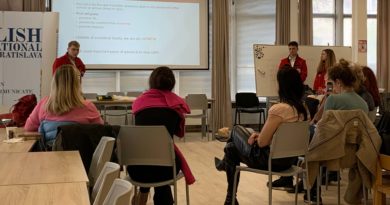
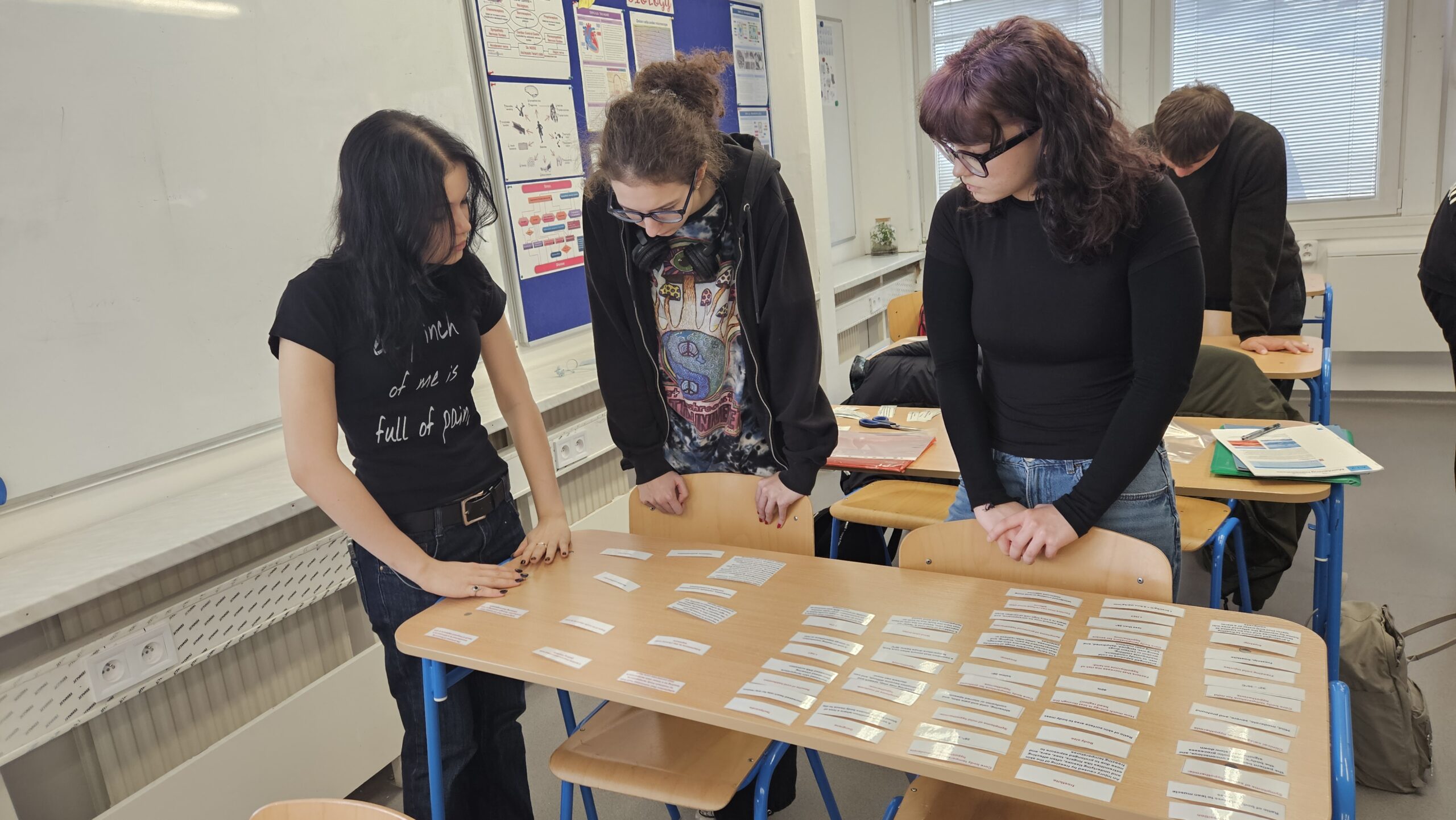
Students explain what sickle cell anemia is
In biology classes DP1, students study a wide range of topics in molecular biology, cell biology, genetics, genetic engineering, and more. Much attention is paid to examining the mechanisms of various processes occurring at the gene level and affecting the body’s functioning. One such process is the development of sickle cell anemia.
Sickle cell anemia (SCA) is a disease caused by a gene mutation. A single amino acid is replaced in the hemoglobin molecule. The negatively charged glutamic acid is replaced by uncharged valine. This causes the mutated hemoglobin molecule to develop a shelf-like structure at the valine-containing site. These defective sites cause the defective molecules to stick together, forming a fibrous, non-compact structure that prevents the hemoglobin molecules from folding normally.
As a result, red blood cells containing this type of hemoglobin become sickle-shaped. These red blood cells move poorly through capillaries, clinging to any irregularities. They are unable to clump together to better navigate narrowed blood vessels.
Sickled red blood cells have a shorter lifespan than normal ones and are more easily destroyed. Therefore, patients with SCA suffer from chronic hypoxia—oxygen deficiency. They experience numerous complications: heart, liver, and kidney disease, strokes, visual impairment, gallstones, and chronic pain. All of this significantly impairs the quality of life of patients with SCA and significantly shortens it.
Sickle cell anemia is most common in tropical regions, especially tropical Africa, as well as in Asia, the Mediterranean, and some other areas. In other climates, SCA is extremely rare.
But this disease also has its advantages. Researchers found that people with sickle cell disease (having only one sickle cell gene) had a higher chance of survival in areas where malaria is common. Compared to those without this trait, they had a lower risk of developing severe malaria.
The students found this topic appealing for its complexity and simplicity. Abigel Y13 and Adela Y12 decided to create a demonstration model of the disease’s mechanism and present it as a project at an Open House in April of this year.The students explained step-by-step how it works, demonstrated how to use a diagram of the genetic code, explained the rules of transcription and translation, and demonstrated how a single point mutation can lead to serious clinical consequences.
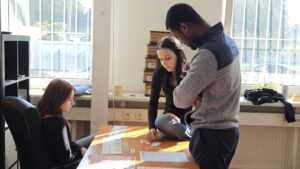
The model created by the students allowed anyone interested to directly experience the processes occurring at the gene level.