
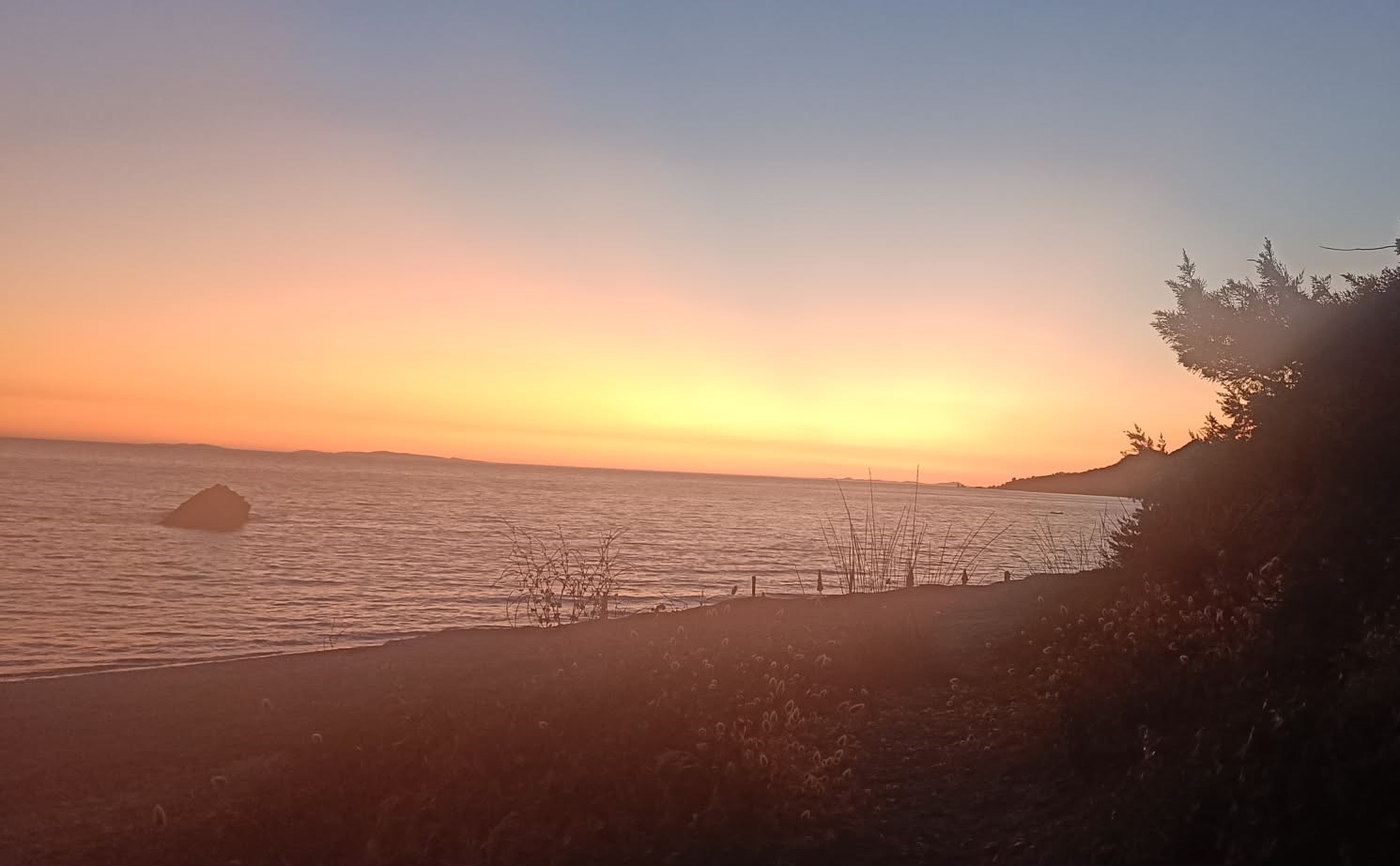
Middle August Sunsets
As summer slowly moves towards its final weeks and a new school year approaches, there is something wonderfully calming about pausing for a moment and watching the sun set.
A sunset may look like a simple and beautiful change in the sky, but behind those warm colors is some fascinating science.
During the day, sunlight travels through Earth’s atmosphere and interacts with tiny particles and gas molecules. The shorter blue and violet wavelengths of light are scattered more strongly, which is why the sky usually appears blue. As the Sun moves lower towards the horizon, its light has to travel through a much greater distance of atmosphere. More of the blue light is scattered away, allowing the longer wavelengths like red and orange to reach our eyes. This is what creates the spectacular colours we associate with sunset.
In different parts of the world, the landscape, atmosphere, weather and even the amount of dust or particles in the air can change the way a sunset appears. And because our international school community brings together people from different countries and cultures, each of us may have our own special memory of watching the sun disappear beyond a different horizon.
In my mother country, Greece, sunsets are particularly special. From the islands and coastal towns to the mountains and countryside, the combination of sea, sky and warm Mediterranean light can create unforgettable views. Watching the sun slowly sink into the Aegean or Ionian Sea is not only a beautiful experience but also a wonderful reminder of how closely science and nature are connected.



No matter where we come from, we can all look towards the same sky and find something beautiful there. A sunset invites us to slow down, breathe, and appreciate the moment.
So, before the holidays come to an end, take a moment to look up!