Early Math Skills in Preschool: How They Develop Naturally
When we think of mathematics, we often imagine numbers, worksheets, and formal lessons. In preschool, however, early math skills develop in a much more natural and meaningful way — through everyday experiences, play, and exploration.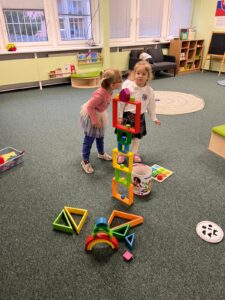
During the preschool years, children begin building the foundations of mathematical thinking long before they are formally introduced to addition or subtraction. They notice patterns, compare sizes, sort objects, and begin to understand quantity. These early experiences form what we call number sense — the ability to understand numbers and how they relate to the world around them.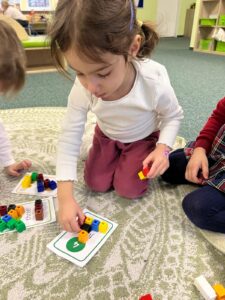
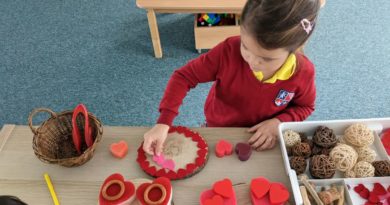
In the classroom, math is not limited to a specific lesson time. It happens throughout the day. When children count how many friends are present, they are practicing one-to-one correspondence. When they build with blocks, they explore concepts such as size, balance, and spatial awareness. Sorting toys by colour or shape introduces classification, while lining objects up helps them understand order and sequencing. 


Language also plays an important role in early math development. Words like more, less, bigger, smaller, first, and lasthelp children describe and make sense of their observations. Through conversations and guided activities, children begin to connect these ideas to real-life situations.
At this stage, the focus is not on memorization, but on understanding and exploration. Children learn best when they are actively involved — touching, moving, comparing, and discovering. These experiences help them build confidence and develop a positive attitude toward mathematics from an early age.
At EISB, we support early math development by creating a rich learning environment where children can explore these concepts naturally. Whether they are counting during circle time, measuring while playing in the sand, or recognizing patterns in art, they are building essential skills that will support future learning.
By nurturing curiosity and providing meaningful opportunities to explore, we help children see that math is not just something we learn — it is something we experience every day.