Model United Nations: Learning Beyond the Classroom
From April 23–25, our students had the incredible opportunity to step into the world of diplomacy, debate, and global collaboration at a Model United Nations conference in Žilina. What unfolded over these three days was far more than an academic exercise. It was an immersive experience in global citizenship, communication, and real-world problem-solving.
Each student was assigned a country to represent, requiring them to move beyond their own perspectives and adopt the policies, priorities, and positions of another nation. This demanded thoughtful research, preparation, and, perhaps most importantly, empathy. Students quickly realized that representing a country is not about personal opinion. It is about understanding complexity, balancing interests, and engaging with the world from multiple viewpoints.
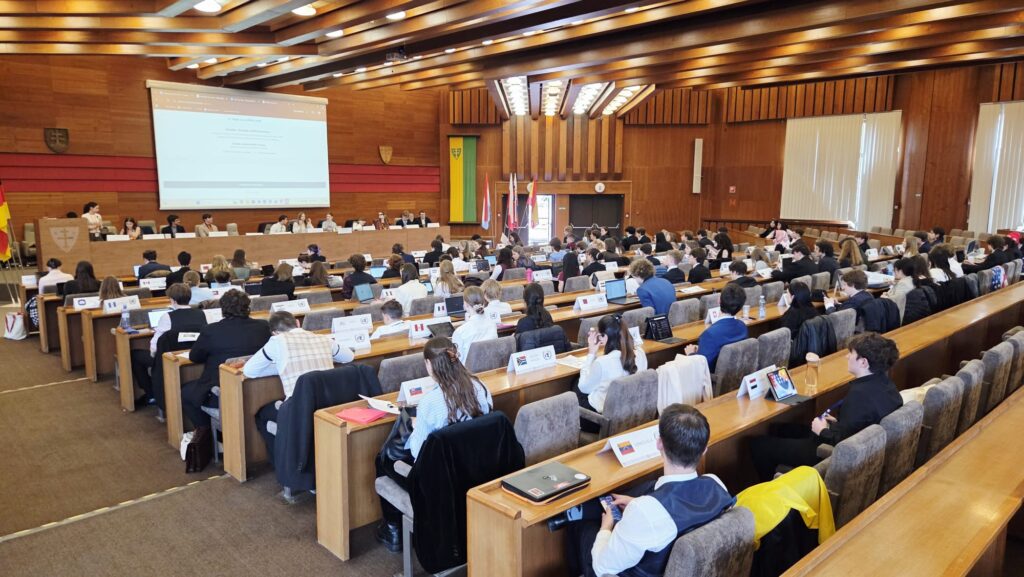
During committee sessions, students worked alongside peers from across Europe to tackle pressing global issues. Delegates debated, negotiated, and collaborated to draft resolutions, all while navigating differing perspectives and priorities. These sessions challenged students to think critically, speak confidently, and listen actively. These are skills that are essential not only in academic settings, but in life beyond school.
A major highlight of the conference was the full General Assembly. In this formal setting, students presented their resolutions, engaged in structured debate, and voted on proposed solutions. Watching them step up to speak in front of a large, international audience was a powerful reminder of how much growth can happen when students are given authentic opportunities to perform. Their confidence, clarity, and professionalism were truly impressive.
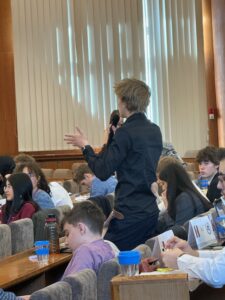
Beyond the formal sessions, the conference also offered valuable opportunities for connection and community. Students participated in a social event, where they were able to build relationships with peers from Slovakia, Spain, Poland, Belgium, Germany, Luxembourg, and Finland. These informal interactions are just as important as the debates themselves, helping students develop interpersonal skills, cultural awareness, and lasting friendships.
Another enriching aspect of the experience was the opportunity to hear speeches from representatives connected to various national embassies. These speakers brought real-world insight into international relations, diplomacy, and global cooperation, bridging the gap between simulation and reality. For students, this added an extra layer of authenticity and inspiration, showing how the skills they are developing can translate into real-world impact.
The experience was equally valuable from a professional perspective. As a teacher, it was a unique opportunity to connect with and learn from fellow educators from different countries and educational systems. Sharing ideas, approaches, and experiences with colleagues in an international setting reinforces the importance of collaboration not only for students, but for teachers as well. These exchanges contribute to our own growth and ultimately enhance the learning experiences we bring back to our classrooms.
Experiences like this embody what education should strive to be. Students are not just learning content. They are applying knowledge, developing essential skills, and engaging with the world in meaningful ways. They are learning how to communicate effectively, think critically, collaborate across cultures, and approach complex challenges with confidence and creativity.
Most importantly, they are beginning to understand their role as global citizens. They are individuals who can contribute thoughtfully and responsibly to an increasingly interconnected world. We are incredibly proud of how our students represented themselves, their school, and their assigned countries. Their engagement, resilience, and willingness to step outside their comfort zones made this experience both impactful and memorable.
Žilina was not just a trip. It was a powerful step in their journey toward becoming the thinkers, communicators, and leaders of tomorrow.