About Machine Learning
Machine Learning & Artificial Intelligence:
An intuitive look
by Schlosser, Imre (Year 12, DP Computer Science)
In the current age, the term Artificial Intelligence (AI) has been thrown around and used to describe everything from self-driving cars to ChatGPT to even smart fridges. But what truly is AI? Most people view AI as a sort of black box of mystery. We put some words in the box, it starts buzzing, making all sorts of sounds, and by the end, it gives us an answer. You may ask, how does this happen? I cannot fully explain this to you as this would require a full scientific paper, however I can give you a bit of an insightful look that may make it seem just a bit more intuitive.
The term that people refer to as AI currently, almost entirely corresponds to a topic within computer science and math known as machine learning. Machine Learning (ML) is the field of computer science that builds systems which are able to learn and improve from data without human intervention. This means that computers are able to learn on their own and learn without humans having to teach or program them. However the way we “teach” computers is a bit different than how we teach humans. The way machines learn can be put into three big categories: supervised learning, unsupervised learning and reinforcement learning. The easiest way to think of a computer learning is to think of how a toddler learns. Supervised learning is like a toddler seeing a dog and then you telling the toddler that it is a dog. The kid will then learn that a dog is a small fluffy animal that barks. Supervised learning allows the kid to understand that everything that fits that criteria is a dog. Supervised learning learns specific details about things. Unsupervised learning is like leaving the child to learn what a dog is on its own. It will figure out that a dog is fluffy and that it likes to sniff things a lot. However the kid may mistake a cat for a dog. Unsupervised learning picks up on details on its own. Finally, reinforcement learning is like letting a child decide whether an animal is a cat or a dog. If the toddler decides correctly, then you tell them that they are right, if they are incorrect, you tell them they are incorrect. Reinforcement learning learns from feedback.
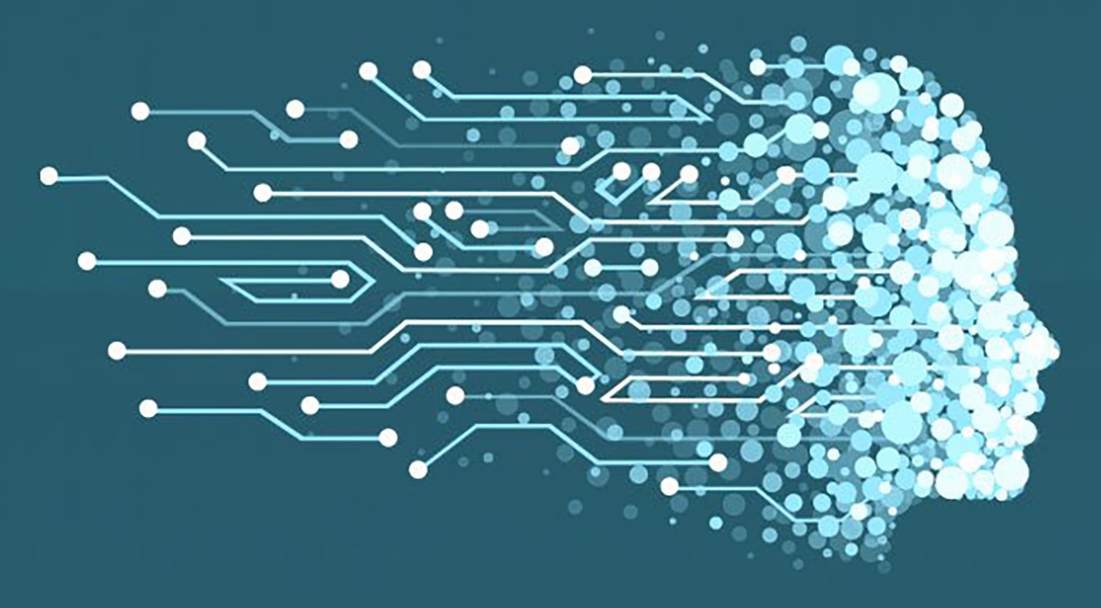
But how does a computer know and understand what something is? In truth, it doesn’t know what something is. It can only predict whether it thinks something is what it is or what it thinks comes next. It does this with the help of neural networks (NNs). NNs try to emulate the way the human brain works by using mathematical functions which are called the nodes or the neurons of the network. Each node is a bit different as the numbers it uses in the function are different. These are then placed next to each other and together perform thousands if not millions of mathematical operations at once in order to make a prediction. The process by which this happens can be thought of like this: The prompt you give an AI (ChatGPT, Gemini, Claude) is taken and converted into numbers which the computer understands. The network then performs its set of calculations on the numbers given to it and gives the result of the calculation. The result is then converted back to words that a human understands and those words are what the AI responds with. I will not explain how neural networks work and their training beyond this as it requires more complex mathematical knowledge, however if you are interested and believe that you understand mathematics well, I highly suggest the series “Neural Networks” by the YouTube channel 3Blue1Brown.
It is important to not forget the importance of considering the ethical aspects of current AI. Because computers need to perform large amounts of complex mathematical calculations, they require large computational resources. These are usually datacenters that exist and are very resource intensive. They also negatively affect the environment surrounding them. We must also ensure that AI is trained on unbiased data as biased data has the potential to lead an AI to discriminate against groups or forget important details about information. Unbiased and clean data also minimizes the environmental damage caused by the datacenters as using unbiased data minimizes the amount of times an AI has to be trained in order for it to function.
In short, current AI is not a magical tool with a brain that a computer uses to know, but instead, a bunch of mathematical functions. A bit of a boring explanation, however an important explanation that the understanding of can help you utilize AI better and maybe inspire you to try and make your own AI (like I have). It is important to not forget the downsides that AI has and the damage it may cause. We have a responsibility as humans to make sure we do not damage the planet and responsible use of AI is a part of that. I hope my article has helped you have a more intuitive understanding of the inner workings of Artificial Intelligence and Machine Learning.