Quadratic Quest: Design Your Own Roller Coaster
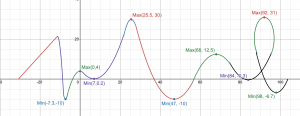
During our study of Quadratic Functions, both the Y11 and Y10 students took part in the “Quadratic Quest: Design Your Own Roller Coaster” math project. This project allowed students to apply their knowledge of quadratic functions in a creative and engaging way. It incorporated graphing, problem solving, and analysis skills while connecting mathematics to real-world applications.
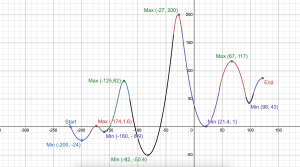
Throughout the project, students worked toward answering the following ESSENTIAL QUESTIONS:
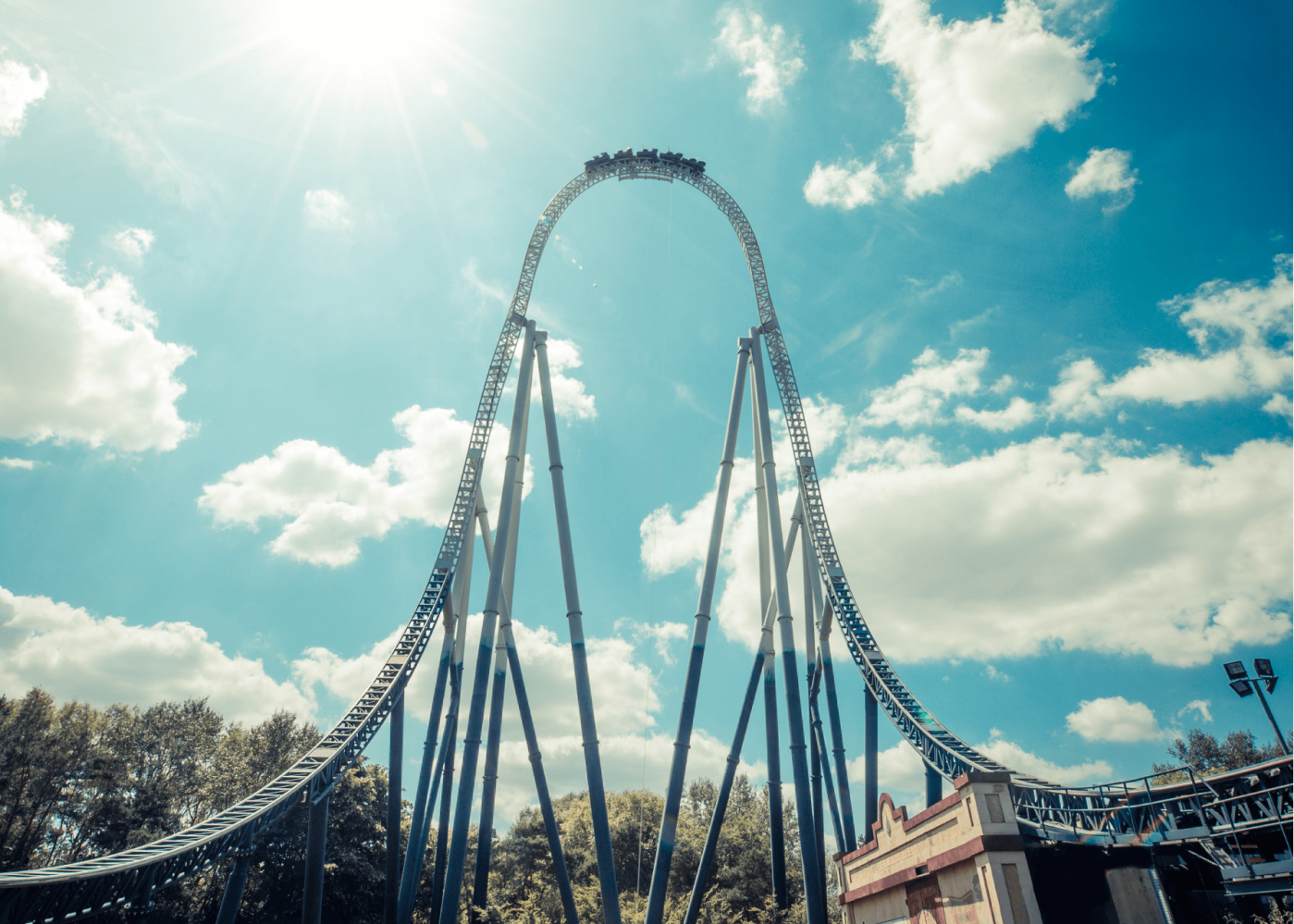
- How do quadratic functions model the shape of roller coaster hills?
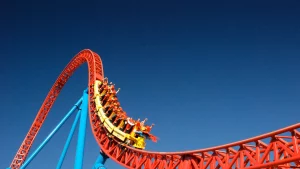
- What are the key features of quadratic functions, and how do they relate to roller coaster design?
- How can we use quadratic functions to solve real-world problems in roller coaster design?
- How do different quadratic functions interact when
combined in a single design? - What is the relationship between the algebraic representation of a quadratic function and its graph?
- How can we use technology to enhance our understanding and representation of quadratic functions?
In this project students found the most difficult part was:
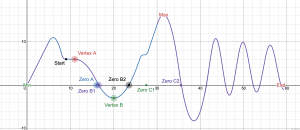
- Converting the equations to standard form and calculating the things like the vertex, axis of symmetry, and intercepts.
- Make sure all the hills connected properly using “domain restrictions”.