Why Handwriting Still Matters in a Digital World
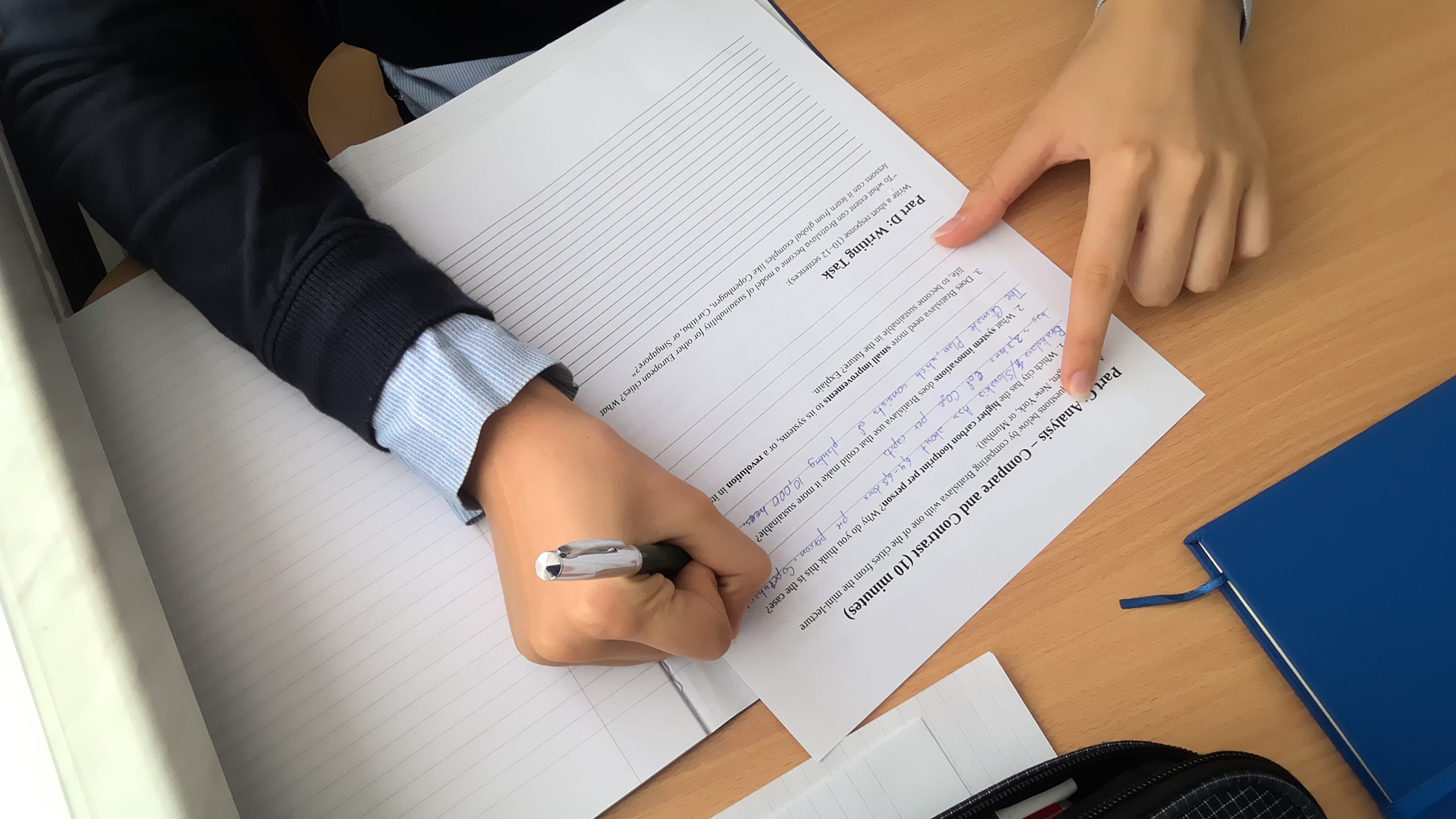
In an era of instant messaging and cloud-based documents, the sight of a student hunched over a notebook with a pen in hand can feel almost nostalgic. However, at EISB, we view handwriting not as a relic of the past, but as a sophisticated cognitive tool. While digital fluency is essential for the modern world, there is a unique magic that happens when a physical pen meets paper, a connection between the hand and the brain that typing simply cannot replicate.
Research into neuroplasticity suggests that handwriting is a far more demanding and rewarding “workout” for the brain than hitting a keyboard. When we type, every letter requires the same mechanical movement. In contrast, handwriting requires a complex series of unique strokes for every character, which activates deep motor and visual centers in the brain. This physical effort forces us to slow down, and in that deceleration, something vital happens: we process information more deeply. Because we cannot write as fast as we speak or think, the brain is forced to summarize, prioritize, and synthesize ideas in real-time. This is why students who take notes by hand often show significantly better memory retention and a clearer understanding of complex concepts than those who merely transcribe lectures on a laptop.
This philosophy is exactly why our MYP4 and MYP5 English Language and Literature students are often asked to handwrite their final project submissions. By removing the “delete” key and the distractions of the internet, we invite students into a state of deep focus. Writing a final draft by hand requires a high level of intentionality; every word carries weight, and every sentence must be considered before it is committed to the page. This practice doesn’t just produce better essays; it builds the physical and mental stamina required for high-stakes international examinations, where legibility and the ability to organize thoughts under pressure are paramount.
For teenagers, especially those navigating the complexities of language acquisition, the benefits are even more pronounced. The tactile nature of forming letters helps the brain “map” new vocabulary and syntax more effectively, providing a physical anchor for abstract linguistic rules. Beyond the technical, there is also the matter of personal identity. A student’s handwriting is a reflection of their individual voice, a unique signature that feels far more authentic and human than a standard digital font.
At EISB, we aren’t just teaching our students how to write; we are teaching them how to think with precision. By picking up a pen, our students are taking an active, physical role in their own intellectual growth, proving that sometimes the best way to move forward is to embrace the deliberate pace of the written word.