Year 8 Atomic Model Presentations
Friday, February 21, was a day of excitement and discovery as our Year 8 students proudly presented their atomic model projects. It was incredible to see how much effort, creativity, and enthusiasm they put into both their research and their physical models. This wasn’t just another science assignment—it was an opportunity for them to step into the shoes of the great scientists who shaped our understanding of the atom.

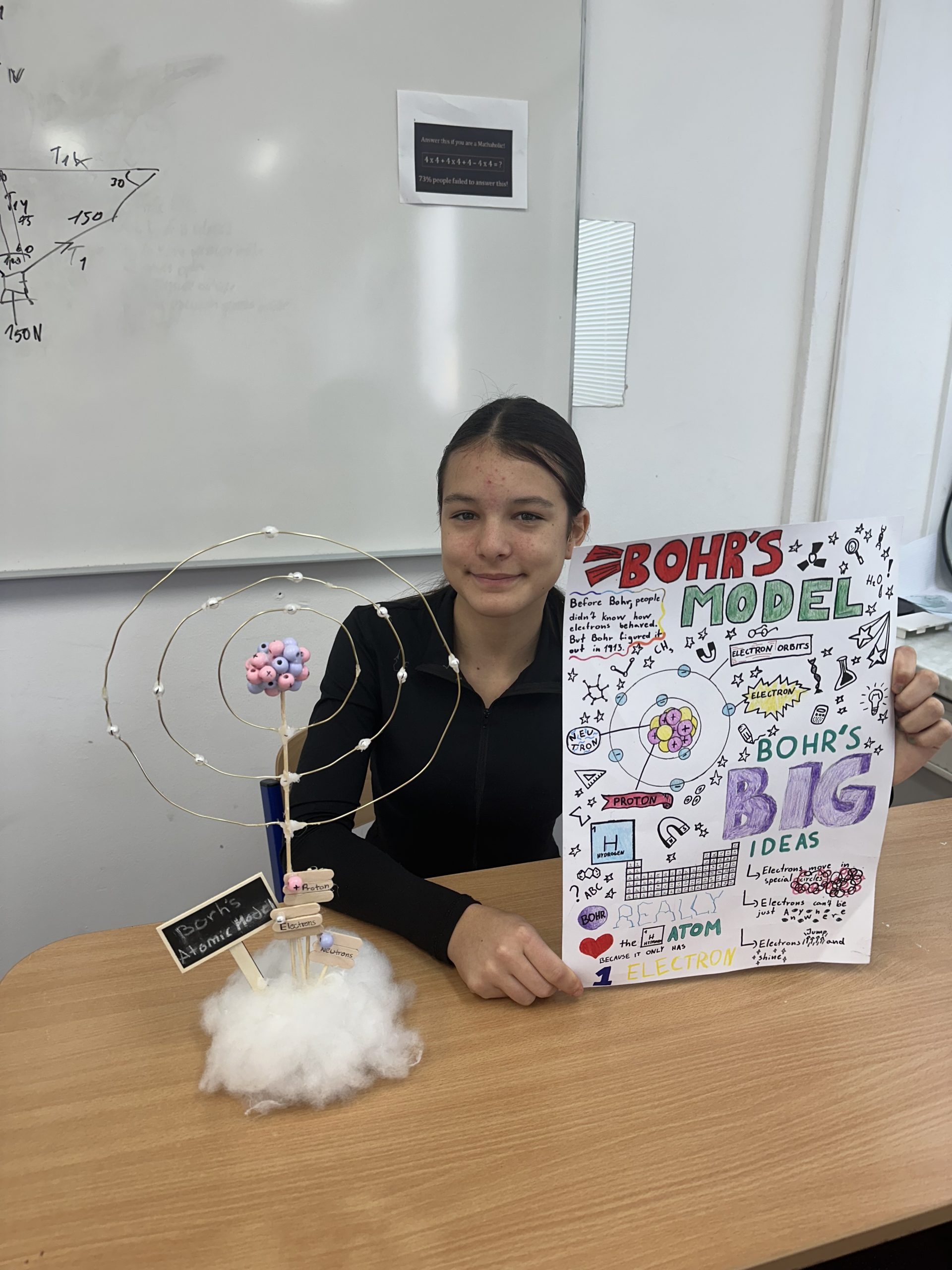
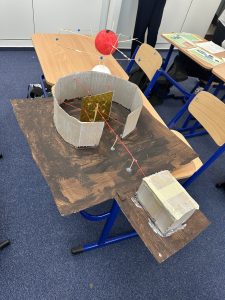
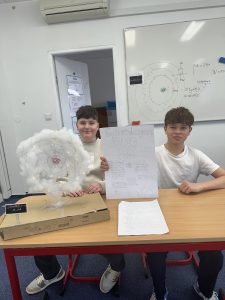
The challenge was simple but ambitious: build a physical representation of an atomic model and deliver a 10-minute presentation explaining its significance. Three groups took on the task, each bringing a different atomic model to life. The Rutherford group recreated the famous gold foil experiment, explaining how it led to the discovery of the nucleus. The Bohr group illustrated electron orbits in a way that made energy levels feel tangible. And the quantum model team tackled the complex ideas of Schrödinger with surprising clarity, demonstrating how modern science views electron probability clouds rather than fixed paths.
What stood out the most was how engaged the students were—not just in presenting their own models but in listening to and learning from each other. They asked thoughtful questions, made connections to real-world applications, and even found ways to make complicated concepts easier to grasp. You could see the lightbulb moments happening in real-time, and that’s what science education is all about.
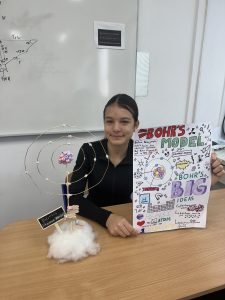
Beyond the knowledge they gained, this project gave them a sense of confidence and ownership over their learning. It was amazing to watch them explain these complex ideas with such enthusiasm, knowing they had put in the work to truly understand them. And, of course, seeing them have fun while doing it made the experience even more rewarding.
Days like this remind me why I love teaching—seeing students push themselves, collaborate, and take pride in what they create is something truly special. I couldn’t be prouder of their hard work, and I’m excited to see them continue to grow as young scientists.