Geometry Stations
Mathematics is all around us, and perhaps no branch of mathematics makes this more visible than geometry. Shapes, angles, patterns and spatial relationships are not just things we find in textbooks; they are things we can see, move, build, compare and explore.
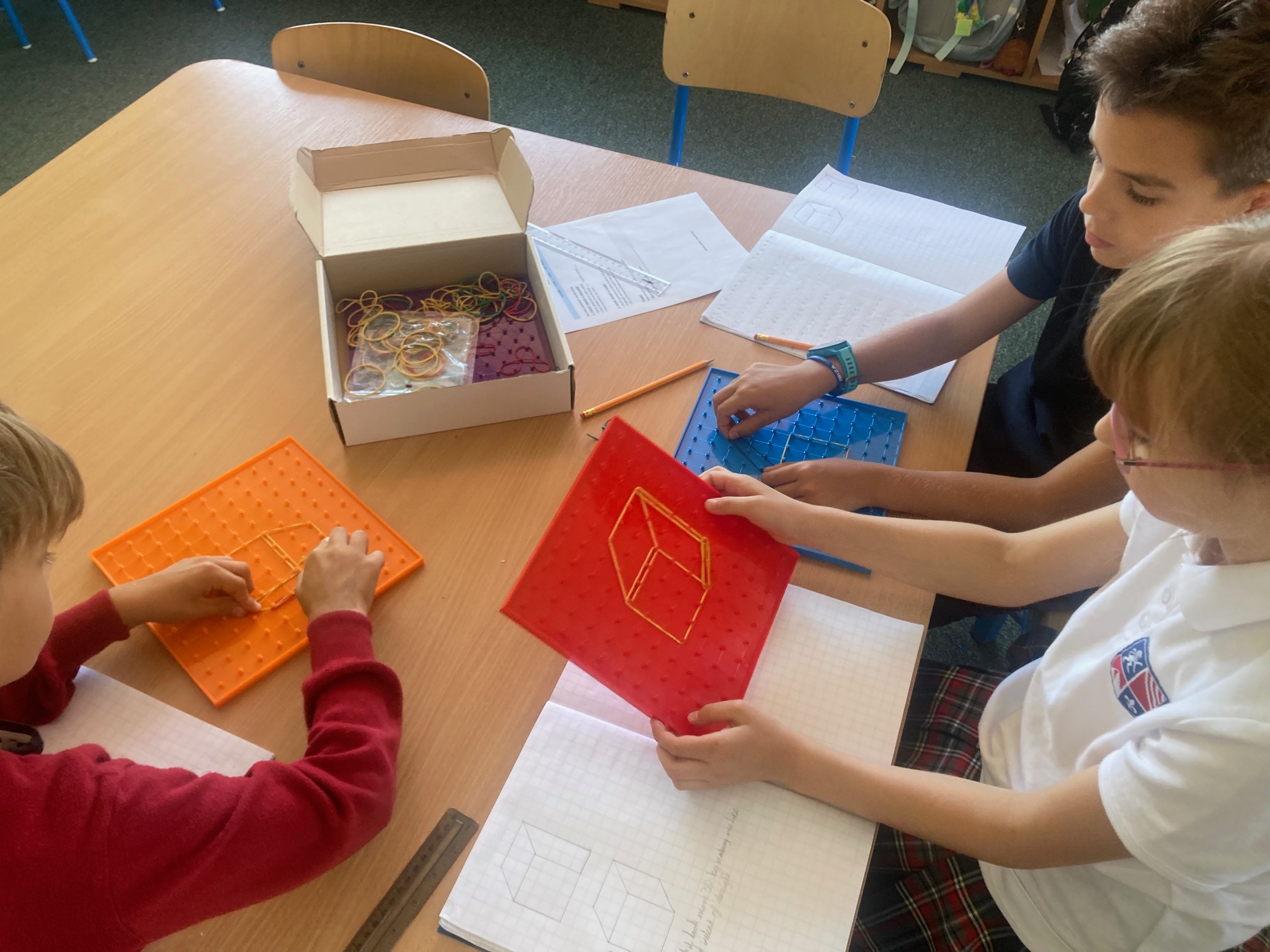
This year, the particular make-up of my classroom has brought me back to using learning stations. Geometry and stations are a natural fit because they allow students to encounter the same mathematical ideas in different ways. Instead of simply being told about a concept, students can look at it, touch it, manipulate it, discuss it and test their understanding.
During one lesson, I was observing students at Station Four. Something interesting happened. By the time the group that had started at Station One reached me, they already knew the answers to all of the questions on the lesson’s exit ticket — without anyone having explicitly taught them those answers.
They had discovered them through the experience.
That is one of the most rewarding things to see in a classroom: students doing the intellectual work themselves. The teacher creates the environment, provides the right challenges and resources, observes, asks questions when needed, and then gives students space to make connections. Sometimes, the less we intervene in the learning, the more ownership students take of it.
And they were learning much more than geometry.
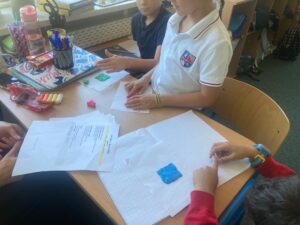
Moving independently between stations required students to manage their time and make decisions about how long they needed to explore each concept. When one student understood something before another, they had opportunities to explain their thinking and help a classmate make sense of it. They listened, questioned, clarified and worked together. They also learned that being part of a learning community means taking responsibility for the environment — including leaving each station ready for the group that followed.
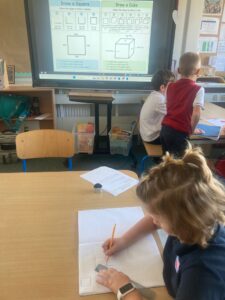
This is where a mathematics lesson also becomes a Teaching Towards Tomorrow lesson.
At EISB, we want students not only to learn mathematics, but to become better learners through mathematics. Experiences like this create opportunities to develop our four EISB learner outcomes: Learning How to Learn, Learning How to Think, Learning How to Reason and Learning How to Communicate. Students organise themselves and recognise what they need to understand; they explore patterns and make connections; they test ideas and explain why something works; and they communicate their understanding so that others can learn with them. These are skills intended to become increasingly independent and transferable beyond a single mathematics lesson.
This also reflects a central idea of EISB’s TTT approach: curriculum is the vehicle for developing the learner. What students are learning about matters — in this case, geometry — but so does what they are becoming better at doing through that learning.
Perhaps that was the most important thing happening at those stations. The students were certainly learning geometry. But they were also practising how to explore, how to manage themselves, how to help someone else understand, how to learn from one another and how to take responsibility for a shared space.