Year 9 STEM Project – Building a Working Dynamometer
Recently, our Year 9 class completed a hands-on STEM project that brought together Physics, Mathematics, and Engineering in a truly engaging way. The task was to design and construct a fully working dynamometer using everyday materials such as springs, cardboard, and simple lab equipment.
The Science Behind the Project
At the heart of this activity was Hooke’s Law, which describes the relationship between the force applied to a spring and its extension. Students explored how a spring stretches proportionally to the applied force, as long as the elastic limit is not exceeded.
This allowed them to connect theory with practice and understand how scientists calibrate real measuring instruments.
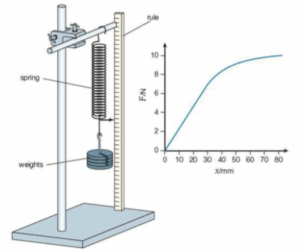
Designing a Dynamometer
Students worked in groups to build their own dynamometers following a structured set of instructions:
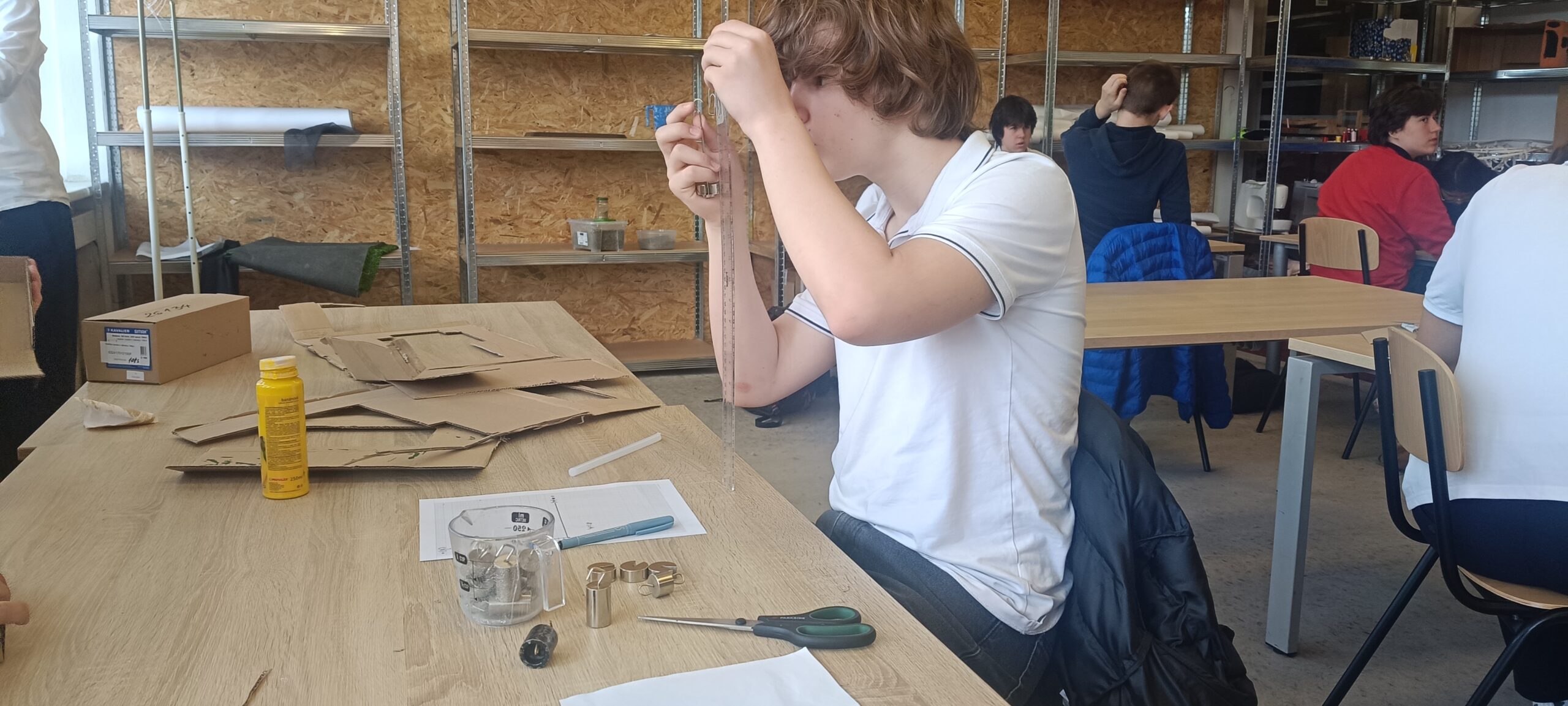
One of the most valuable parts of the project was the experimental data collection phase. Students recorded values of force and corresponding extension and then used this to create a meaningful scale.
For example:
- A force of 10 N might stretch the spring by a certain measured distance
- That point was then accurately marked on their cardboard scale
This process helped students understand proportionality and the importance of accurate measurement in scientific investigations.
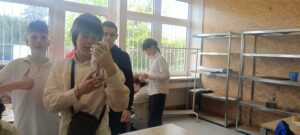
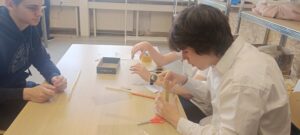
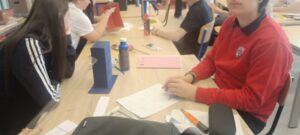
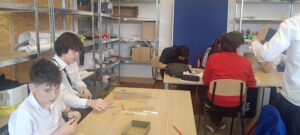
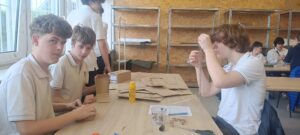
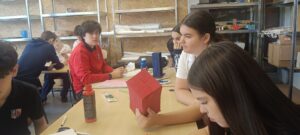
Engineering, Design & Creativity
Once the scientific calibration was complete, students moved on to the engineering and design phase by finalising their measurement scales in pen or marker, adding protective casings or covers and naming and presenting their dynamometers. This stage encouraged creativity, ownership, and attention to detail important skills in real-world engineering design.
Testing and Evaluation
In the final phase, students tested their devices using unknown weights to evaluate accuracy. This was followed by a reflection and oral presentation, where they discussed:
- How accurate their dynamometer was
- What sources of error may have affected their results
- What they would improve if they repeated the project
This reflection step was particularly powerful, as students began to think like scientists and critically evaluating their own work and suggesting practical improvements.
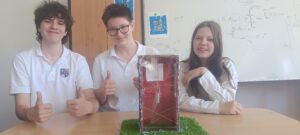
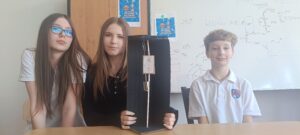

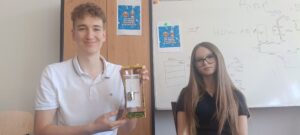
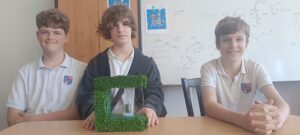
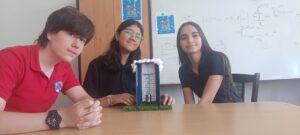
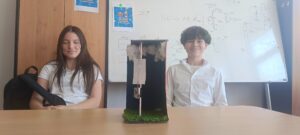
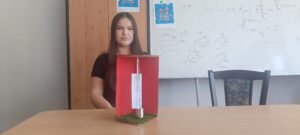

This STEM project was a strong example of interdisciplinary learning. Students naturally integrated:
- Physics: forces, mass, units, Hooke’s Law
- Mathematics: proportionality, calculations, data interpretation
- Engineering & Design: building, testing, improving prototypes
It showed how these subjects are deeply connected in real scientific and engineering contexts and Year 9 students approached this project with enthusiasm, curiosity, and real determination. The quality of their final dynamometers was impressive, but even more important was the learning process itself.