A Human Thing: Why This Guatemalan Anthropologist Cares About Your Deadlines
Every now and then, a student will sit at my desk, shoulder their backpack, look me in the eye, and ask a wonderfully candid question: “Why do you care so much if I don’t submit my work on time? It’s just my grade that suffers.” It’s a fair question from a teenager navigating the heavy workload of the MYP. But my answer usually surprises them. I look at them and say, “I care because I am your teacher, yes. But I care even more because I am an anthropologist.”
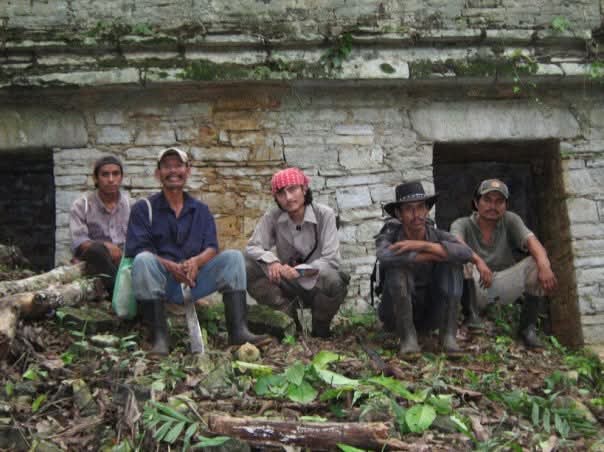
To understand why a missed deadline bothers an anthropologist, you have to understand where I come from. My journey didn’t start in a European classroom. I am a Guatemalan archaeologist and anthropologist. Before landing here in Slovakia, my life and work took me across the diverse terrains of Latin America and through the fast-paced systems of the United States. I have excavated ancient ruins, studied living communities, and adapted to entirely different cultural codes multiple times over.
If my global journey has taught me anything, it is this: human societies do not function on isolated islands. They function on trust, accountability, and communication.
Moving Beyond the Notebook
When students view school merely as a game of compliance—a cycle of copying down notes, following a teacher’s rigid directions, and turning in a paper or a project just to tick a box—they are missing the point of education entirely. The “real world” outside our school walls doesn’t actually care if you are a perfect note-taker.
The modern world demands human skills. It demands individuals who know how to speak clearly, how to negotiate effectively when things go wrong, and how to express their authentic identity in a crowded room.
When I set a deadline, I am not trying to act as a bureaucratic dictator. I am introducing a simulated micro-society. In the professional world—whether you are negotiating an archaeological permit with a government in Central America, analyzing field data, collaborating on a project in New York, or teaching right here in Bratislava; timelines matter. Keeping your word matters.
The Art of Negotiation and Open Dialogue
This is where anthropology comes back into play. Anthropologists don’t just observe from afar; we engage. We listen.
Because I view my classroom through this human-centric lens, I don’t expect robotic perfection. Life happens. Stress peaks. Ideas get blocked. That is why I actively maintain a policy of open dialogue with each and every one of my students.
I tell them: If you can’t meet a deadline, don’t just disappear. Come to me. Speak to me. Advocate for yourself. Learning how to approach a mentor, explain your situation, and negotiate an extension or an alternative path is a far more valuable life skill than pulling an unhealthy all-nighter just to hand in a subpar essay. When a student takes ownership of their situation and initiates that conversation, they are no longer just a passive student; they are practicing how to be an active, self-aware human being.
My diverse background allows me to see our classroom as a beautiful, multicultural melting pot of emerging identities. I don’t want my students to just pass a class; I want them to learn how to navigate the complex social fabrics of the world they will inherit. So, yes, I care immensely when you don’t submit your work on time. I care because I am looking past the paper in front of me, straight towards the future adult you are becoming.
Let’s keep talking, let’s keep negotiating, and let’s keep growing together.