
The Oral Hygiene Secret: Why Your Tongue Holds the Key to Whole-Body Health
In the world of international schooling, we are always looking for “marginal gains”—those small, daily habits that lead to significant long-term success. While most of us have mastered the habit of brushing our teeth at least twice a day, we often overlook a critical player in our oral microbiome.
Brushing is essential because it disrupts the biofilm of bacteria that causes tooth decay and gum inflammation. However, if you are only brushing your teeth, you are essentially cleaning only 25% of your mouth. The remaining 75% includes a powerful, textured muscle that acts as a reservoir for bacteria: your tongue.
The Science Behind the Scrape
The surface of your tongue is not smooth; it is a complex landscape of “papillae” (tiny bumps). These bumps create a perfect environment for food debris and sulfur-producing bacteria to hide.
Why is cleaning this area non-negotiable?
-
The Halitosis Factor: Research indicates that the vast majority of bad breath is caused by gases released by bacteria on the back of the tongue. Scraping physically lifts this “coating” away rather than just moving it around.
-
Taste Perception: A coated tongue dulls your taste buds. By removing the biofilm, you effectively “reset” your palate, making healthy foods taste more vibrant.
-
Digestive Kickstart: In many traditional wellness practices, tongue cleaning is the first step in digestion, signaling to your body that it is time to process nutrients.
Your 30-Second Routine: The “How-To”
To get the most out of this habit without irritating your taste buds, follow these specific steps:
-
-
Timing: Ideally, do this first thing in the morning before you drink water. This prevents you from swallowing the bacteria that accumulated while you slept.
-
The Technique: Reach the cleaner as far back as comfortable. Apply light, even pressure and pull forward toward the tip.
-
The “Magic Number”: Aim for 3 to 5 strokes each time.
-
Maintenance: Rinse the tool under warm water after every stroke to ensure you aren’t redepositing debris.
-
Choosing Your Tool: Why Material Matters
While you can find plastic scrapers at most pharmacies, they are often less effective and less sustainable.
-
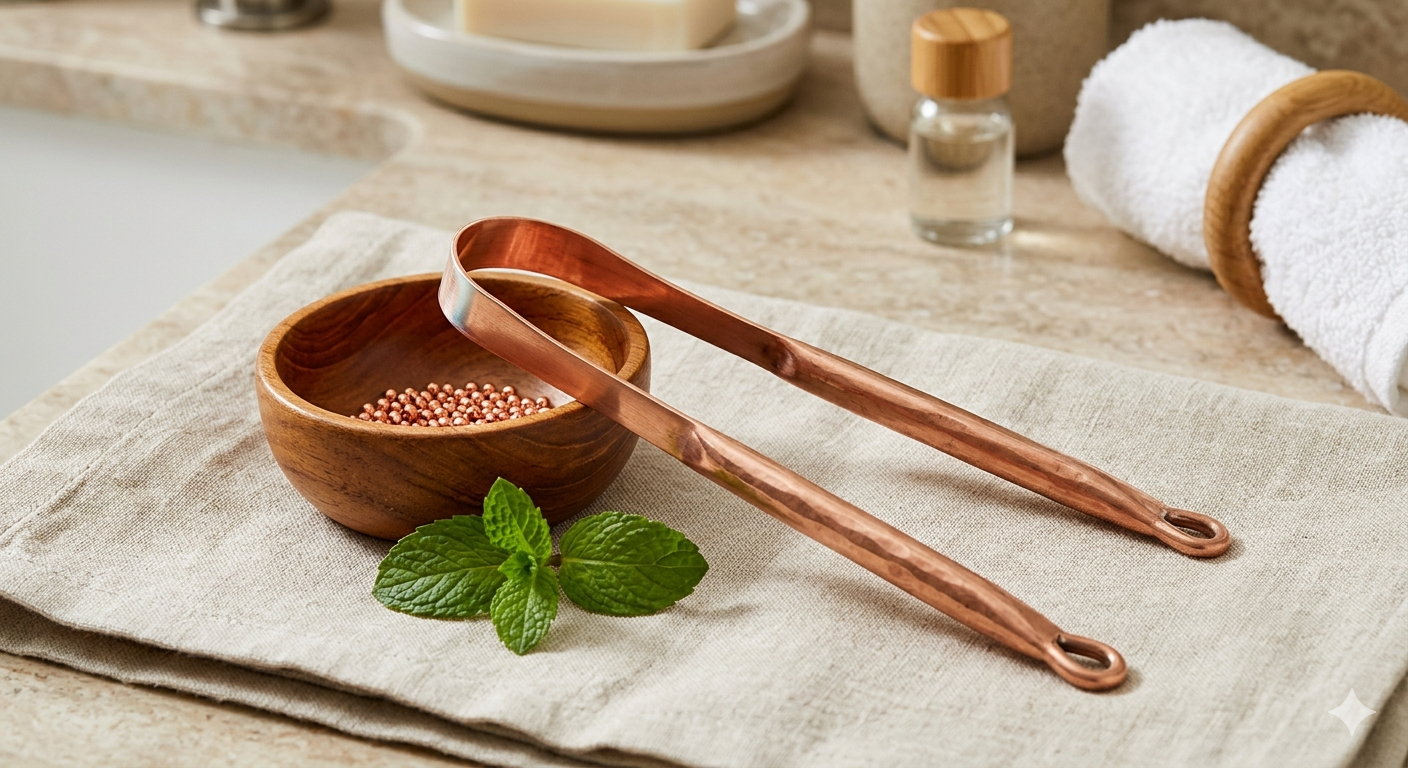
Copper (The Top Choice): Copper is naturally antimicrobial. It doesn’t just collect bacteria; it actively works to neutralize it. It is also incredibly durable and eco-friendly.
-
Stainless Steel: A fantastic medical-grade alternative that is easy to sanitize and will last a lifetime.
-
Avoid the Brush: Using a toothbrush on your tongue is a common mistake. Bristles are designed for the hard surface of teeth; on the tongue, they often push bacteria deeper into the tissue rather than lifting it off.
The Vital Connection: Your Mouth and Your Heart
Per published research, the most compelling reason to refine your dental hygiene isn’t just a bright smile—it’s cardiovascular longevity.
Medical science has uncovered a profound link between oral bacteria and heart health. When we neglect the bacterial load in our mouths, those microorganisms can enter the bloodstream through the gums. This can trigger systemic inflammation, a known contributor to:
-
Arterial Plaque: Bacteria from the mouth have been found in the fatty deposits of people with atherosclerosis.
-
Endocarditis: An infection of the heart’s inner lining often tied to oral microbes.
-
Increased Stroke Risk: Chronic oral inflammation is a documented risk factor for vascular issues.
By incorporating a tongue cleaner into your routine, you are doing more than just freshening your breath; you are reducing the inflammatory burden on your entire body.
Final Thoughts for our School Community
As we strive for excellence in and out of the classroom, let’s not forget the foundations of health. This simple, 30-second addition to your morning can transform your energy, your health, and your confidence.
Make the switch to a stainless steel or copper scraper today—your heart (and your seatmates) will thank you!
…and – Don’t forget to FLOSS! 🙂