Exploring Adaptation with Year 8
In Year 8 Science, our students have been diving into the fascinating world of Biology, exploring animal kingdoms, ecosystems, and, most recently, the remarkable concept of adaptation.
Adaptation has proven to be one of the most engaging topics for students this term. They are not only learning how animals evolve structural and behavioral traits to fit their surroundings but also discovering how these changes are essential for survival and maintaining balance in nature.
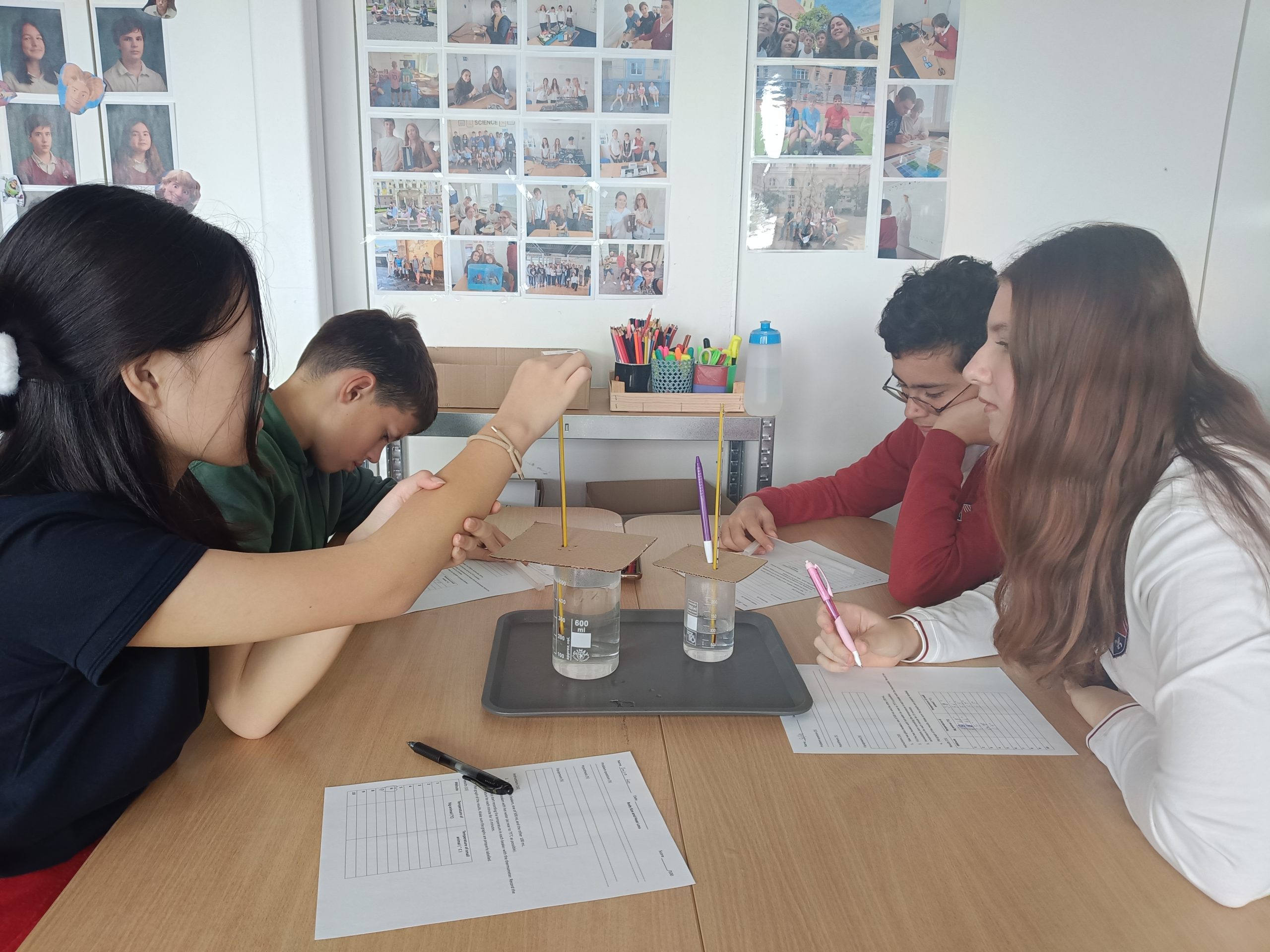
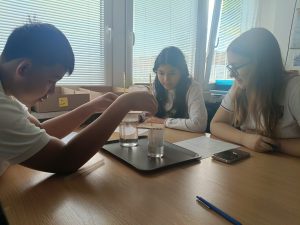
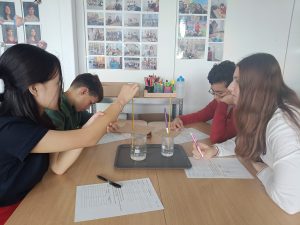
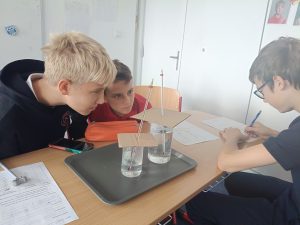
To bring theory to life, students took part in a hands-on STEM investigation designed to demonstrate how an animal’s size can influence its ability to regulate body temperature – a key example of structural adaptation. Using analogue thermometers, students measured heat loss from beakers of different sizes, each representing a “small” and a “large” animal. By carefully recording temperatures over time, they observed how smaller “animals” lose heat more quickly than larger ones. That was a simple but powerful demonstration of how body size affects an organism’s ability to survive in different climates.
This practical activity encouraged students to combine a wide range of scientific skills, including using and reading scientific equipment accurately, recording and analyzing data, plotting and interpreting graphs, drawing evidence-based conclusions linked to biological principles and applying critical thinking to explain real-life biological phenomena.


By engaging with adaptation through both theory and experiment, our Year 8 students are developing not only scientific knowledge but also essential competencies such as observation, precision, analysis, and reasoning. Most importantly, they are learning to see science as an active, creative process that helps us understand the amazing diversity and resilience of life on Earth.