🇲🇪🇩🇮🇦 🇦🇳🇩 🇯🇴🇺🇷🇳🇦🇱🇮🇸🇲 – Course overview 25/26
-
Ethics in journalism – understanding responsibilities, fairness, and accuracy.
-
News writing and reporting – developing clear, concise, and engaging articles.
-
Storytelling techniques – crafting compelling narratives for different media formats.
-
Media’s role in society – analyzing its influence on public opinion and politics.
Throughout the course, students will actively apply their learning through hands-on experiences, such as: Written assignments and media analysis projects, practical reporting exercises, multimedia production and the exploration of print, audio, visual, and online media formats.
COURSE UNITS
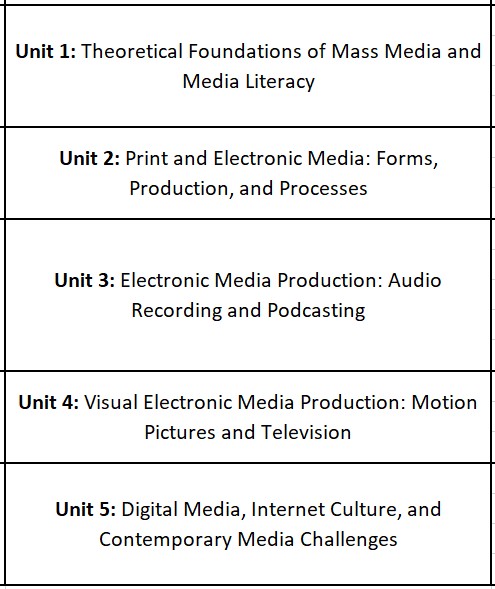
The course develops skills across four main areas:
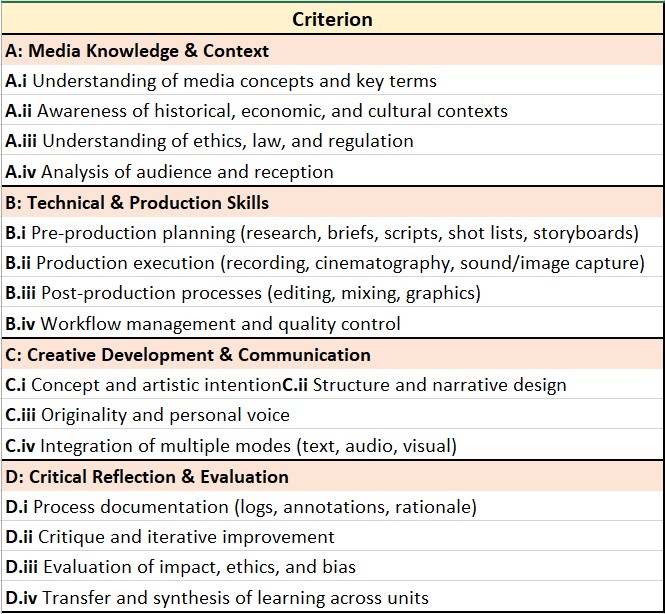
A. Media Knowledge & Context – Understanding how media works, its history, cultural and economic influences, ethical rules, and audience perspectives.
B. Technical & Production Skills – Planning, creating, and editing media content while managing workflow and quality.
C. Creative Development & Communication – Crafting original, engaging work by combining text, audio, and visuals with a clear narrative and personal voice.
D. Critical Reflection & Evaluation – Reflecting on processes, ethics, and impact, applying feedback, and improving work across projects.
CRITERIA
This set of criteria is designed to cover everything a student needs to succeed in media, blending knowledge, skills, creativity, and reflection. Criterion A focuses on understanding key ideas, real-world contexts, and ethical responsibilities, so work is thoughtful and informed. Criterion B builds the hands-on skills needed to plan, film, edit, and produce quality content. Criterion C encourages original ideas, clear storytelling, and combining text, sound, and visuals in creative ways. Criterion D helps students reflect on their process, spot areas for improvement, and think about the impact and fairness of their work. Together, they make sure students can think, create, and review their media with both skill and purpose.
By the end of the course, students will:
-
Have a well-rounded understanding of the media landscape.
-
Acquire practical skills for journalism and related fields.
-
Develop critical thinking, ethical decision-making, and effective communication skills.