When Learning Doesn’t Stick — Part 2: Knowing vs. Recognizing: Why Some Learning Fades
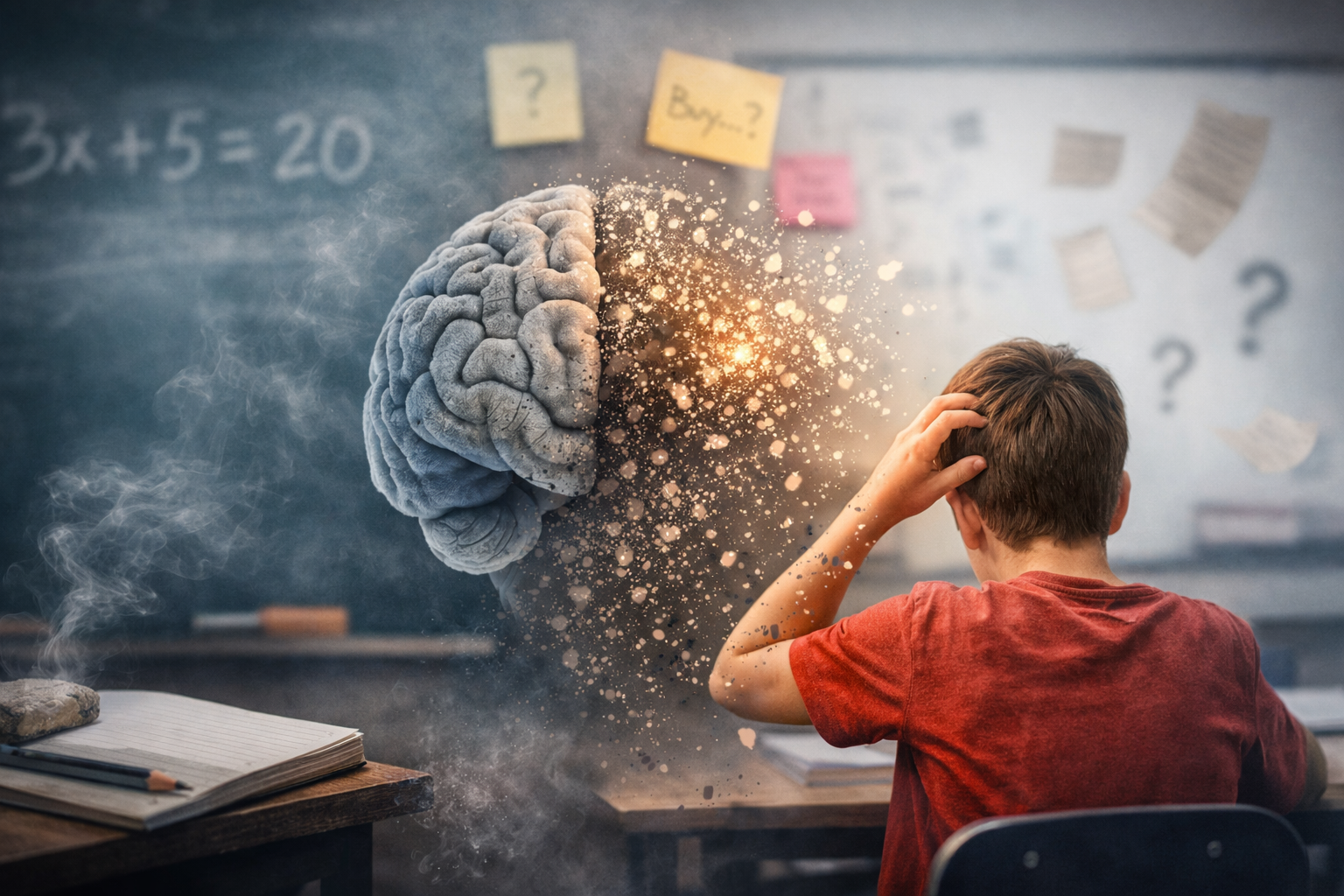
In Part 1 of this series, we explored a common frustration for teachers and parents: students sometimes return to school appearing to have forgotten material they seemed to understand only months even weeks earlier.
We introduced the idea of shallow encoding—learning that is stored lightly in memory and fades quickly when it isn’t used.
But to understand why this happens, we need to look more closely at an important difference in how the brain processes knowledge:
The difference between recognizing something and truly knowing it.
Recognition Feels Like Understanding
Have you ever opened a book you read years ago and immediately recognized a paragraph or idea? The words feel familiar, and you may even think, “I remember this.”
But if someone asked you to explain the concept without the book in front of you, it might suddenly feel harder.
That’s recognition.
Recognition occurs when the brain identifies something it has seen before. It feels comfortable and reassuring, but it does not always mean the knowledge is deeply stored.
Students experience this frequently in school.
When reviewing notes or watching a teacher solve a problem, everything can feel clear and familiar. A student may think:
“I understand this.”
But recognition often disappears the moment the student must generate the solution independently.
True learning is not recognition, it is retrieval which comes from understanding.
Retrieval Builds Memory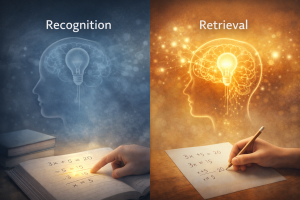
Retrieval means pulling information out of memory without seeing it first.
For example:
- Explaining a concept in your own words
- Solving a problem without looking at the steps
- Teaching an idea to someone else
- Applying knowledge to a new situation
Every time the brain retrieves information, the memory becomes stronger and more stable.
This is why students who actively work through problems, explain their thinking, and apply ideas in different contexts tend to remember their learning longer.
The act of struggling to recall information actually strengthens memory.
Why Modern Learning Environments Can Encourage Recognition
Many aspects of modern learning—often unintentionally—emphasize recognition rather than retrieval.
For example:
Students frequently review slides, notes, or recorded explanations. While this feels productive, it mostly reinforces familiarity rather than strengthening memory.
Similarly, step-by-step examples can help students follow a process, but if students only observe solutions instead of generating them, the brain does less of the work required to build strong memory connections.
Technology also changes the relationship students have with information. When answers are always available instantly, students may rely more on access to information than on storing knowledge internally.
None of these tools are inherently harmful. In fact, they can support learning when used thoughtfully.
But without opportunities to attach it to prior learning, to retrieve knowledge independently, learning can remain fragile.
The Role of Productive Struggle
One of the most powerful drivers of deep learning is something many students initially try to avoid: productive struggle.
When students encounter a problem they cannot immediately solve, their brains begin searching for connections.
They test ideas, recall related knowledge, and attempt different approaches. During this process, the brain builds stronger networks linking new information with existing knowledge.
That effort—sometimes uncomfortable in the moment—is exactly what helps learning last.
This is why the most meaningful learning experiences often include moments when students say:
“Wait… let me think about this.”
Struggle is not the opposite of learning.
In many cases, it is the engine of learning.
From Knowing to Applying
When students move beyond recognizing information and begin retrieving and applying it, learning becomes far more durable.
A student who understands a mathematical concept deeply can reconstruct a procedure even after time has passed.
A student who has explained a scientific idea in their own words can apply that idea to a new situation.
In other words, the knowledge becomes flexible.
Flexible knowledge is what allows students to solve unfamiliar problems, connect ideas across subjects, and adapt their thinking to new challenges.
Why This Matters for Education
If recognition feels like understanding but fades quickly, then education must go beyond helping students recognize information.
It must help them own their knowledge.
This means creating learning environments where students:
- retrieve information from memory
- explain their thinking
- apply ideas in unfamiliar situations
- work through challenges instead of avoiding them
When these experiences become part of learning, knowledge moves from the surface of memory into deeper structures that last.
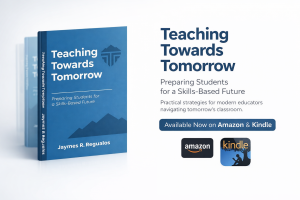
In the final article of this series, we will explore how EISB’s educational approach—outlined in Teaching Towards Tomorrow—is designed to support this kind of deeper learning.
Because when students learn how to think, reason, and apply knowledge, learning doesn’t just stick.
It becomes a foundation for everything that comes next.