New technologies in medicine
This article may be of interest to those who want to become a doctor or a scientist. Are there such enthusiasts in our school? Of course, yes. I would like to introduce some of them from the Upper school: 13th grade – Alexandra, Stephany, Rebeka, Morteza, Tomas; 12th grade – Abigel, David, Claudia; 11th grade – Adrina, Mykhailo, Alexandra, Veronika, Rouzhin, Jake.
According to the World Health Organization, by 2030 the world will lack approximately 18 million health workers. So our graduates will not be left without interesting and promising work.
Medicine is one of the fastest growing industries, where technological innovations and scientific discoveries are constantly changing the face of professions. In recent years, new medical professions have emerged that previously seemed like science fiction. These professions not only expand the possibilities of treatment and diagnostics, but also open up new horizons for those who want to connect their career with medicine. Every year, technologies are becoming more deeply integrated into medical practice, which requires new knowledge and skills from specialists.
Modern technologies such as artificial intelligence (AI), robotics, and bioengineering have revolutionized medical research and patient care.
What are the benefits of using AI and robotics?
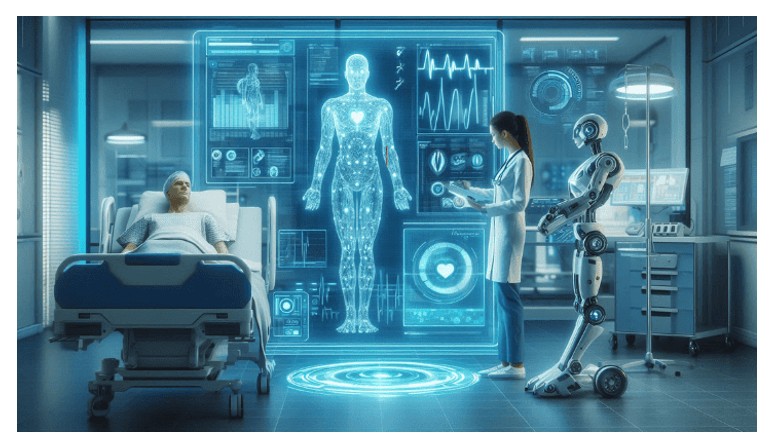
– AI helps doctors make faster and more accurate diagnoses, while robotic systems allow complex surgeries to be performed with minimal risks.
– AI is used to analyze large amounts of medical data, which helps identify patterns and predict the development of diseases. For example, machine learning algorithms can analyze medical images and detect early signs of cancer that may not be visible to the human eye. This allows treatment to begin at an earlier stage, significantly increasing the chances of recovery.
– IA is used to develop new drugs and optimize clinical trials.
– IA is used in the management of healthcare facilities. AI-based systems can analyze patient data and predict the need for medical resources, which helps optimize the work of hospitals and clinics.
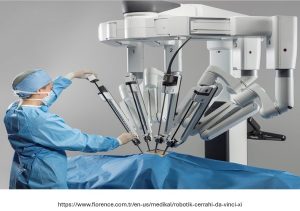
– Robotic surgical systems, such as Da Vinci, allow for highly precise operations with a minimum number of incisions. This reduces the recovery time of patients and reduces the risk of complications.
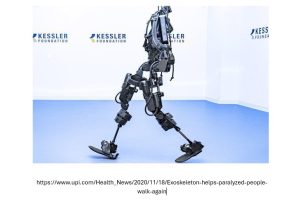
– Robotics is also used in rehabilitation. Robotic exoskeletons help patients regain mobility after injuries and surgeries. These devices can be individually adjusted for each patient, which optimizes and speeds up the recovery process. Robotic systems are used to deliver drugs and medical materials, which reduces the workload of medical personnel and increases the efficiency of medical institutions.
Bioengineering and genetics open up new possibilities for treating diseases at the molecular level. Genetic research allows for the development of personalized treatments that take into account the individual characteristics of each patient. For example, CRISPR technology allows for gene editing and treatment of genetic diseases (this is a topic for another article).
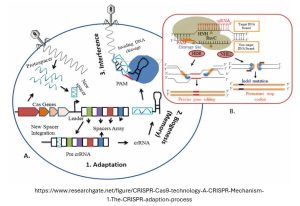
Bioengineering is also used to create biomaterials and artificial organs. For example, scientists are developing methods for growing tissues and organs from stem cells, which can solve the problem of a shortage of donor organs. These technologies can also be used to develop new treatments for cancer and other serious diseases. In addition, bioengineering allows the creation of new types of medical devices, such as biosensors that can monitor a patient’s condition in real time and transmit data to doctors.
In the next article, we will learn about medical professions of the near future that seemed fantastic and unattainable just a few years ago.