
Atomic models mini STEM project by Year 8
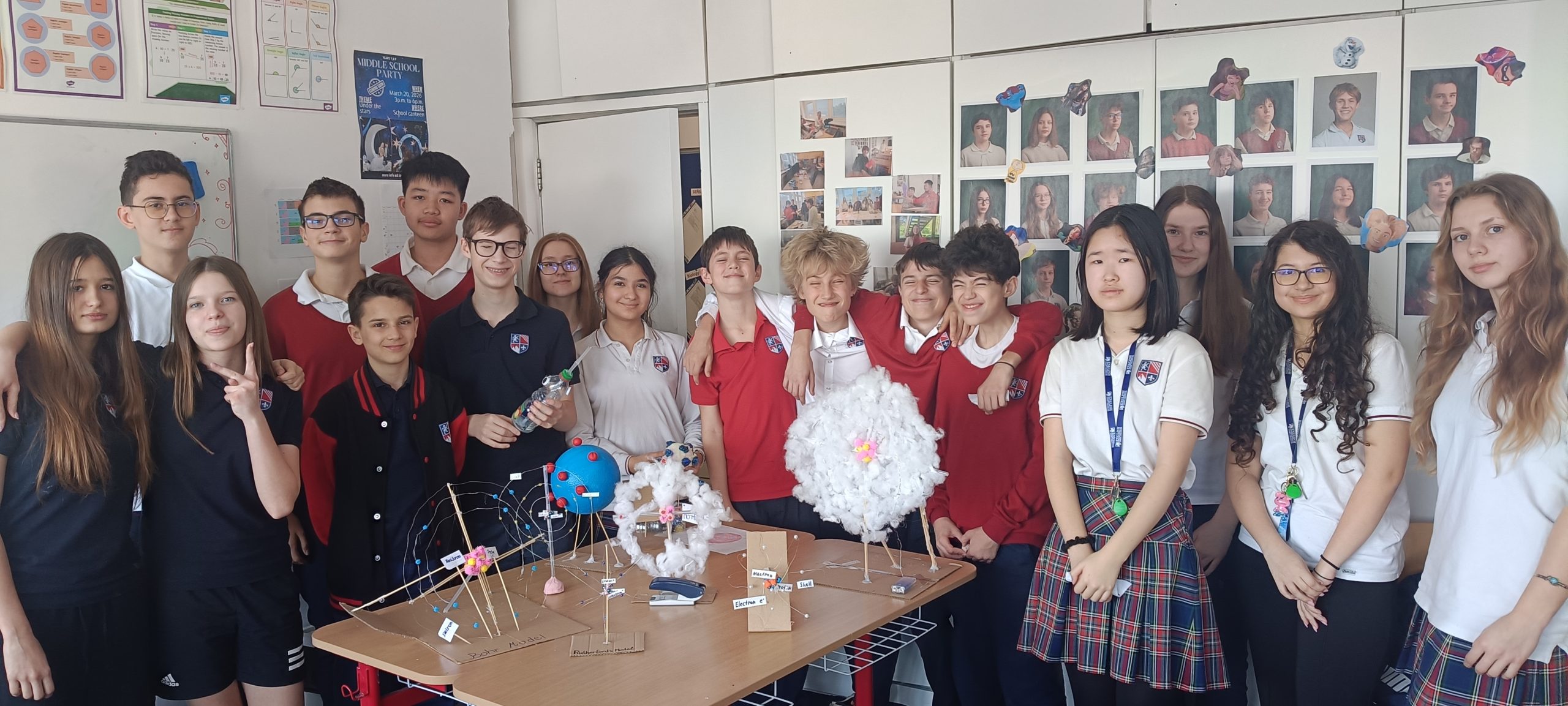
Our Year 8 students today completed an exciting STEM mini project that marked the conclusion of the first chapter of their Chemistry unit. The goal of the project was to deepen their understanding of atomic structure through a creative, hands-on approach: building 3D atomic models representing key historical scientific theories.
Working in small teams, students explored how scientists’ understanding of the atom has evolved over time. Each group researched a specific model and then designed and built a three-dimensional representation to demonstrate the ideas behind it.
Eunjae, Tarik, Zuzana, Amir, and Michael presented the Schrödinger model, illustrating the modern quantum mechanical view of the atom. Their model helped show how electrons exist in probability clouds rather than fixed paths.


Sofia, Mark, Arnika, and Artem recreated J. J. Thomson’s model and demonstrated the famous cathode ray experiment, which led to the discovery of the electron. Their work highlighted how experimental evidence can transform scientific understanding.
Veronica, Jim, Robert, and Karolina focused on Rutherford’s model and the gold foil experiment, which revealed that atoms contain a small, dense, positively charged nucleus.
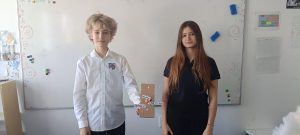
Finally, Brano, Greta, Isabella, and Matvii built a model of Bohr’s atom, showing electrons arranged in defined energy levels around the nucleus.
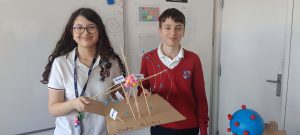

WORK IN PROGRESS


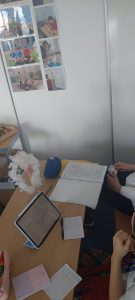
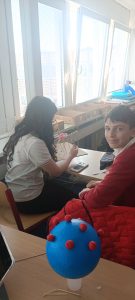
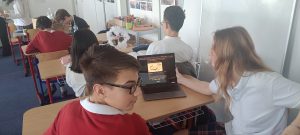
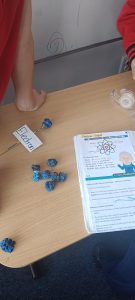
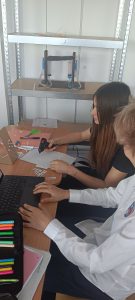
By engaging in research, design, and collaborative problem-solving, students were able to see how science progresses over time. The students approached the project with great enthusiasm and creativity, and their models clearly demonstrated both their effort and their growing scientific understanding. It was wonderful to see them learning!
I am very proud of the work they produced and look forward to continuing our learning journey together in future projects.