Parable of the Sower: Reading Lauren’s Diary like a Fact-Checker
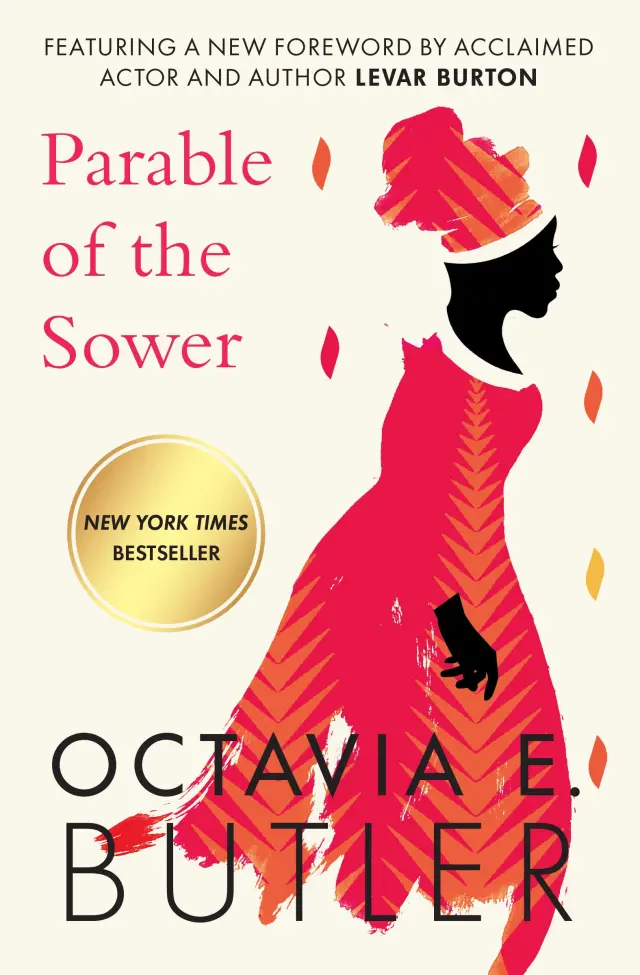
We’re still in our Fake News unit—so we’re reading Parable of the Sower as a field manual for truth-seeking. Lauren’s diary shows how to observe, test, revise, and act responsibly when information is scarce and noisy.
When we launched the Fake News unit, we made a simple promise: you would leave better at telling the difference between what’s said and what’s shown, and you’d be able to defend your judgments with evidence. Octavia Butler’s Parable of the Sower slides perfectly into that promise. The novel isn’t a lecture about misinformation; it is a story about a young writer—Lauren Olamina—who keeps a public record of observation, doubt, and revision while the world around her unravels. In other words, Lauren is doing our unit on the road.
Read her diary as you would any non-literary text from Paper 1. Start by locating the purpose and audience. Each entry responds to a real need: to make sense of a rumor, to set a plan, to convince a wary companion. Her audience shifts—sometimes it is her future self, sometimes her traveling group—and Butler lets those shifts shape register and detail. When an Earthseed verse drops into the prose, treat it the way you treated a slogan in a PSA: it is a crafted attempt to frame reality. Ask, as we’ve been asking all term, whether the scene that follows confirms the verse or exposes its limits.
Because we are still practicing method → effect → meaning, focus less on what Lauren believes and more on how the text gets you to weigh belief. Timestamps create tension and credibility; price lists and distances function like data points; plain lexis gives way to scriptural cadence when Earthseed needs rhetorical lift. Butler’s world is quantified—liters of water, hours of daylight, kilometers to the next safe stop—so it rewards the habit we’ve been building in class: verify the claim against measurable reality. Company towns promise safety, private security sells order, neighbors trade rumors like currency; Lauren writes it down, checks it against what the road proves, and updates her view. That is exactly the loop we want you to internalize.
The big ideas in Parable also belong to this unit. “God is Change” isn’t a mystic line; it’s a demand for responsible response. If change is guaranteed, then ethics is the work of shaping it—deliberately, with others, under constraints you can name. That’s why the novel keeps turning empathy into logistics. Hyperempathy slows Lauren down when violence erupts, but it also builds alliances no one else can hold. The book refuses cheap heroism and instead teaches the literacy of consequences: every decision costs water, light, trust, or time. When you annotate, don’t reduce those costs to “details”—treat them as the reasons a claim stands or falls.
Because many of you are already thinking ahead to IB assessments, notice how the Fake News skills transfer. For Paper 1, you’ve learned to articulate purpose and audience cleanly, then trace how specific choices steer readers toward an interpretation. Butler hands you choices that are visible and arguable: the diary form, the interruptions of Earthseed verse, the oscillation between survival jargon and hymn-like brevity, the way names and labels are adopted and shed on the road. A single paragraph on any entry can show deep understanding, precise analysis, and purposeful organization without drifting back into plot.
If you’re preparing for the Individual Oral, Parable gives you a flexible spine for a focused global issue. Truth and authority? Pair a short passage with a corporate brochure that defines “security” in its own terms. Scarcity and ethics? Set an Earthseed entry against an infographic on water access. Privatization and accountability? Bring in a municipal PSA or an editorial cartoon. What matters is that your comparison remains disciplined: how do the methods of each text position an audience to accept a particular view, and where do you see those methods succeed or fail?
Inside the classroom we’ll keep the routines familiar. Before each reading, sketch a one-line hypothesis about the entry’s purpose and audience. After reading, test it: which choices proved you right—or forced you to revise? Keep a short log of rumors encountered and the evidence that confirmed or contradicted them. In discussion, practice the concession-and-limit move you used in your argument essays: acknowledge the attractiveness of a claim (“A company town offers stability when the road is dangerous”), then mark the limit (“but stability rented from an employer dissolves when the paycheck stops”). These are not just debate tricks; they are the habits that keep readers honest when information is persuasive but partial.
Parents often ask what success looks like in a novel like this. It’s not a perfect memory of events; it’s a visible mind at work. A strong reader of Parable can point to a specific sentence, name the choice that makes it powerful, explain the effect on a particular audience, and show how that effect builds or challenges a larger meaning. That’s the same skill set we’ve been rehearsing with ads, PSAs, op-eds, and infographics—only now the canvas is longer and the stakes are human.
There’s a quiet moment late in the book where building a community feels less like victory and more like drafting a constitution. That tone matters. We’re not reading Parable to feel confirmed; we’re reading to practice the discipline of changing our minds for good reasons. Keep doing the Fake News work inside the novel: slow down, verify, and speak only what you can support. If the book teaches anything, it’s that truth isn’t a tweet—it’s a practice, repeated in public, with people you trust.