

Why Do We Discuss Antigone?
Antigone by Sophocles. A play that precedes our time. Or transcends our time?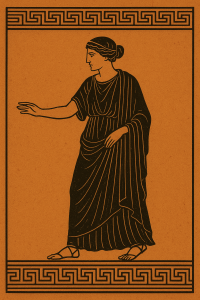
If you study at a Slovak high school (or you graduated decades ago), the name Antigone must ring a bell. For some, just another literary piece, for some, unnecessary obligation. But why do we study it? Shouldn’t students focus more on the Slovak language? And Slovak literature, like P. O. Hviezdoslav, Janko Kráľ or Ľudmila Podjavorinská?
When designing our Slovak Language and Literature curriculum, I decided to confront my students with Antigone early on for two simple reasons:
1. Chronological aspect
Antigone is one of the oldest known pieces of literature in the Western world and a key element in understanding the traditional concepts of drama. For millenia, Sophocles’ work was the blueprint for a number of Western authors – having majorly influenced Shakespeare, who then influenced Ján Hollý or P. O. Hviezdoslav, who influenced contemporary drama. (Of course, there are many other authors in between, I am naming just a few for simplicity.)
Understanding how art imitates art and how we, as a mankind, tend to “recycle” our culture is crucial in being able to critically comprehend and analyse literatary pieces. And I believe this sort of perspective helps students in their further studies of language a literature, be it Slovak, English or any other.
2. Conceptual aspect
The very base of IB-learning is composed of concept-based education. It is the very idea that students should understand how and why things work, not just to name out the necessities. Of course, sometimes it is imperative to learn the rules – The central conflict in the work is between power and morals. For some of you, this sentence may ring a bell from your own Slovak Language and Literature classes. Oftentimes we felt like we needed to learn these by heart even though we could not always elaborate.
Elaborating the concept of power vs morals is the crucial point of this whole unit. It is a timeless conflict, but that is not something I want my students to learn by heart, but instead to discover on their own through other stories that are all around us. I asked them what do they know about slavery, about helping a slave escape to the Free North in the 1800s, similarily to Frederick Douglass, who was born a slave, escaped and became an important U.S. author – just like many others did. Once they learn about the atrocities of the Holocaust, I ask them what would they do – would they stick to their morals and help people hide, risking their own neck? Of course, asking the question “what would they do” now, decades later, is no real question. But how will they act if they witness misuse of power in their life? Will they remember Antigone and her heroic stand against the injustice in this world? In any case, it is best to assume that we as humanity have moved away from our past transgressions, but as a teacher, that is one of the concepts I want my students to recognize – also through literarature.