
Identifying an Organism Using a Dichotomous Key. Biology class Y 10-11
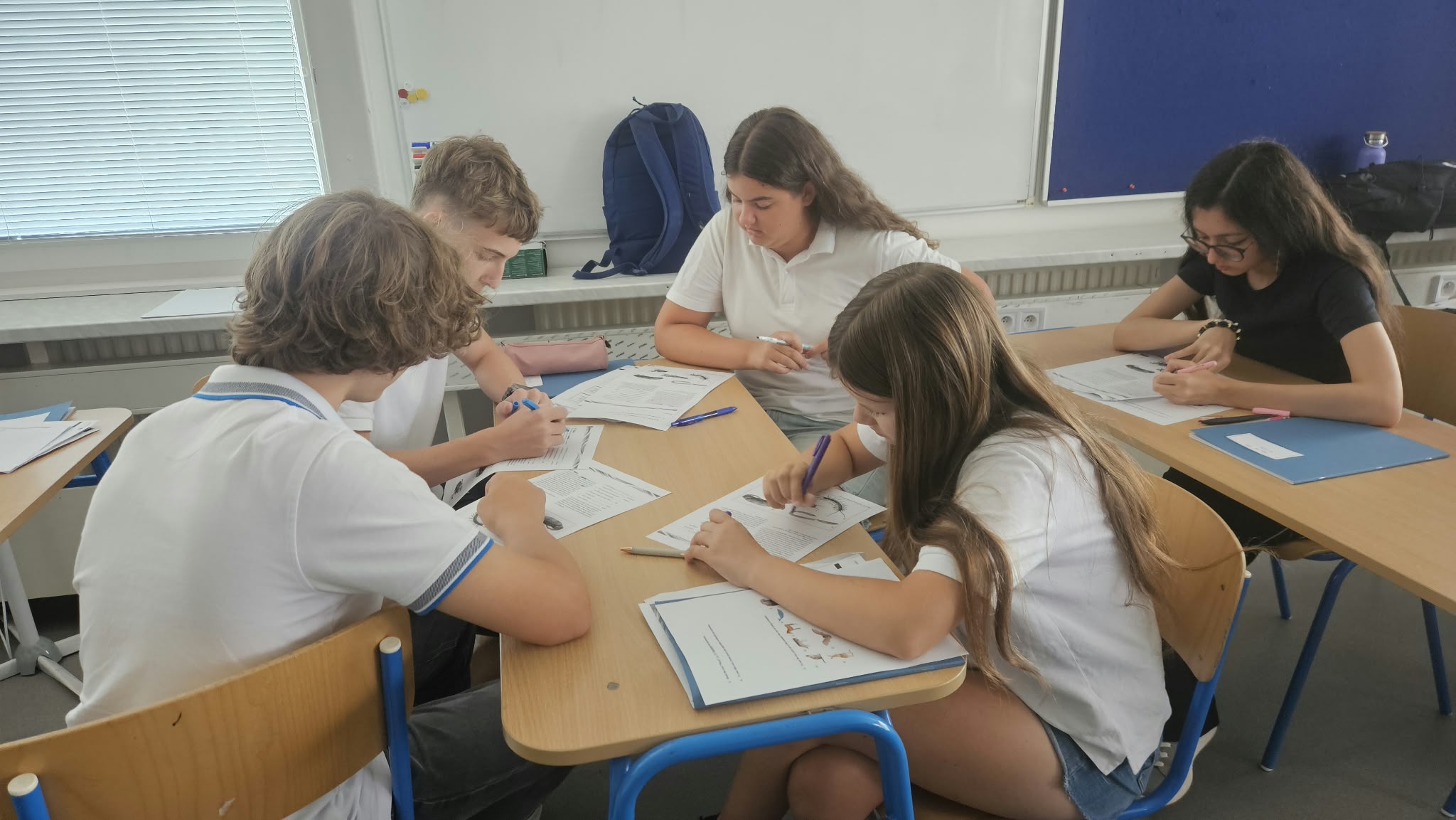
Biology lessons for Y 10-11th students began with the study of systematics (taxonomy). Students were asked to determine the taxonomic classification of the platypus based on its description. Physical characteristics—such as the presence of fur, a bird-like bill, webbed feet, egg-laying reproduction, and a relatively low, fluctuating body temperature—made it difficult to definitively classify the animal as a bird, reptile, or mammal. Only the fact that the female feeds her hatched offspring with milk allowed for its final classification within the class Mammalia. By asking factual and conceptual questions , students clarified many details regarding the animal’s taxonomy and the principles of classification in general.
The next task was to learn how to use a dichotomous key to identify an organism.
How a Dichotomous Key Works
Steps and stages: The key consists of distinct stages. At each stage, two opposing statements are presented.
Thesis and antithesis: The first statement is called the thesis, and the second (alternative) is the antithesis.
Search process: You read the first item (item 1), examine the object being studied, and select the description that matches it.
Moving to the next step: Next to the selected statement, you will find either a final result (the species name) or the number of the next step to proceed to.
Repetition: The process is repeated until you determine the exact name of the object.
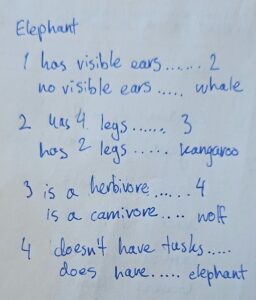
Student group: Arthur, Tadeas Aleena, Alica, and Max identified an “elephant” from a group that also included a whale, a kangaroo, and a wolf. The pic below shows the result of their work.
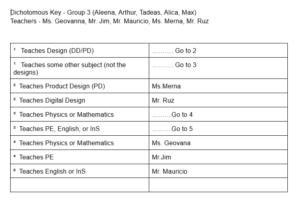
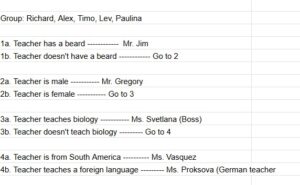
The next task was to identify the teachers chosen by the students themselves.
Here is the result.
Systematics is a rather complex discipline to grasp, even at an introductory level. However, through group work, the formulation of factual and conceptual questions, and unconventional tasks that close to real-life situations, the process becomes simpler, clearer, and more dynamic.