Six Key Concepts in Psychology
Psychology can be defined as the scientific study of the human mind and behavior. However, studying psychology involves much more than simply learning about theories, experiments, and the findings of influential researchers. It also involves developing the ability to question information, examine evidence, consider different perspectives, and think critically about the world around us.
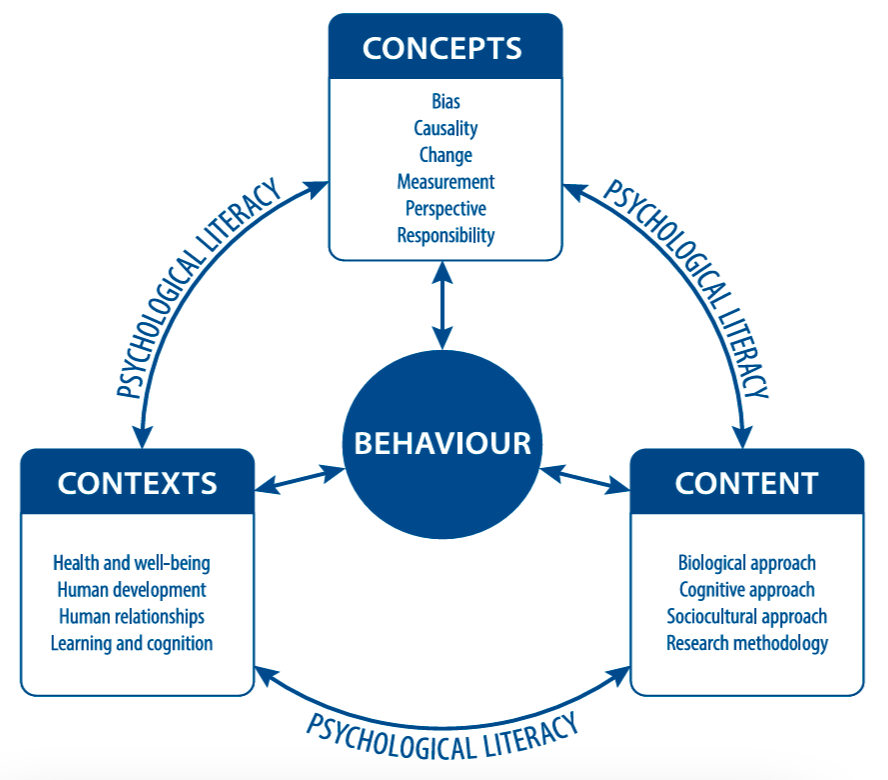
The new IB Diploma Programme Psychology curriculum places particular emphasis on six key concepts: Bias, Causality, Change, Measurement, Perspective, and Responsibility. These concepts are integrated throughout the course, encouraging students to move beyond memorizing psychological knowledge and towards understanding how that knowledge is developed, interpreted, and applied.
IB Psychology Curriculum Model Overview:
Understanding the Six Key Concepts
Bias examines how systematic influences, such as researcher expectations, sampling methods, and cultural assumptions, can affect psychological research and its findings. Students learn to identify sources of bias and evaluate their impact on research credibility, developing the ability to question information and recognize potential biases in research and in everyday life.
Causality explores how psychologists investigate cause-and-effect relationships in human behaviour (E.g., To what extent does X affect Y?). Students distinguish between correlation and causation, evaluating experimental evidence to determine causality. This helps them critically assess causal claims encountered beyond the classroom as well.
Change examines how behaviour and mental processes develop, adapt, or remain stable over time. Students investigate the biological, cognitive, and sociocultural factors influencing psychological change, developing an understanding of how individuals learn, grow, and adapt throughout life.
Measurement considers how psychologists define and measure psychological constructs such as intelligence, memory, and well-being. Students evaluate the validity and reliability of research methods and measurements, strengthening their ability to assess the quality of evidence and information presented in class and in everyday life.
Perspective explores how different psychological approaches and cultural contexts shape explanations of human behaviour. Students compare biological, cognitive, and sociocultural perspectives, learning to consider alternative interpretations and develop more balanced understandings of complex issues.
Responsibility examines the ethical obligations of psychologists when conducting research and applying psychological knowledge. Students consider informed consent, confidentiality, protection from harm, and the responsible communication of findings, developing greater awareness of ethical decision-making in research and society.
Why Do These Concepts Matter Beyond Psychology?
What makes these six concepts particularly valuable is that their relevance extends far beyond the psychology classroom.
We live in a world where information is constantly presented to us through social media, news outlets, advertising, and artificial intelligence. We encounter claims about health, education, relationships, and human behaviour on a daily basis, often without stopping to question the evidence behind them.
As an example, consider a news headline suggesting that social media causes anxiety among teenagers. A student familiar with causality might question whether the research actually demonstrates a cause-and-effect relationship, or whether there is just a correlation between social media and anxiety (e.g., it could be anxiety causing social media usage, or it could be social media usage causing anxiety). An understanding of bias might encourage them to examine who did the research and who participated in the research, while measurement raises questions about how anxiety and social media use were assessed. Perspective might encourage them to consider alternative explanations such as sociocultural explanations of anxiety versus biological explanations of anxiety, and responsibility invites reflection on how such findings should be communicated to the public.
Developing Critical Thinkers
One of the most important aims of education should be to help young people develop the skills necessary to think independently, evaluate information, and make informed decisions.
Through these six concepts, IB Psychology provides students with a framework for doing precisely that. Rather than simply accepting information as fact, students are encouraged to ask questions: How do we know this? What evidence supports this conclusion? Could there be another explanation?
These are questions that are just as relevant when evaluating a scientific study as they are when reading the news, making personal decisions, or engaging in discussions about important social issues. Ultimately, the value of studying psychology is not limited to understanding how the human mind works. It is also about applying this knowledge to everyday life, critically evaluating the information we encounter, making informed decisions, and developing a deeper understanding of ourselves and others.