A word about freedom
Dear EISB Community,
Recently, I wrote about a discussion we had with our Academy students about the significance of November 17, especially in relation to students and the range of opportunities it has brought to us all. However, there is another important meaning of this day. On November 17, 2025, you may come across shops or businesses that have decided to close for the day, even though this day is no longer a public holiday. The same applies to many schools and most universities in Slovakia as well. I think this is best explained by an article published by Edupage, which, I believe, most of us use daily. I took the liberty of translating it into English for you:
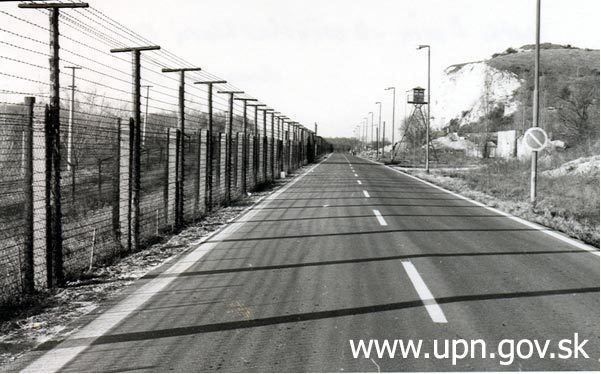
This picture shows the border between Slovakia and Austria before November 1989. The photo shows only the first of the fences, but the entire border zone was several kilometers deep. It consisted of minefields and electric fences capable of killing a person. Dog kennels were placed along the zone, which opened automatically and released dogs trained to tear people apart.
However, this deadly system did not protect the country from foreign enemies – on the contrary, it served to prevent people from leaving Slovakia. Border guards received rewards for shooting their own fellow citizens.
Freedom was also restricted within the country. Thousands of people collaborated with the secret police, informing on their neighbors, colleagues, and friends. Criticizing the government could cost a person their job, a beating at the police station, or end up in prison or forced labor in uranium mines. Political prisoners were tortured and executed without trial for years. Some received long sentences just for distributing a banned book or praying. Tens of thousands of people were sent to concentration camps in Siberia. Many of them died there of hunger and cold.
It was dangerous to show disagreement. That is why even children were taught to lie. In schools, they recited poems about Lenin and Stalin, referring to them as teachers of humanity. In parades celebrating the Great October Socialist Revolution, people waved flags and applauded their leaders. Most knew it was a sham, but non-participation was punished.
Some people say, “Why do we need freedom? The main thing is that we have a good life.” But under communism, the standard of living declined. The shops were empty, and people stood in long lines for meat or toilet paper.
The regime tried to cover up the growing poverty by not allowing people to travel abroad and blocking the flow of information from the outside world. Special antennas were placed on hills to jam foreign radio signals. However, people still noticed that the world beyond the border was different—richer and cleaner. Foreign goods were like something from another planet for us – much higher quality and at the same time unavailable. No one wanted our currency abroad because there was nothing to buy with it; communist products were of lower quality.
Life under communism proved that those willing to sacrifice freedom for a piece of bacon would ultimately gain neither freedom nor bacon.
Yes, some people managed to grab more for themselves and communism suited them. But gradually there was so little of everything that even those who stole from the state no longer had enough. In the end, even the militiamen and the secret police—those who benefited most—were no longer willing to defend communism.
For those who did not experience those times, it is difficult today to imagine what it was like to live in constant fear of saying something.
Today, however, we can learn from this. The beginning of the loss of freedom is often inconspicuous, but its end almost always means a miserable country where people are oppressed, lied to, and deceived.
That is why it is important not to forget November 17. To remember that freedom is a gift for which we must constantly fight.