Medical professions of the future
In the coming years, traditional medical professions such as cardiologist, urologist, therapist, etc. will remain in high demand. Where can you get a quality medical education? You can find information about this here. The best medical schools in Europe where teaching is in English. The best medical schools in the UK. The best medical schools in Europe.
In this article, I will introduce you to some unusual, in my opinion, medical professions of the future and tell you what knowledge and skills are worth developing to become a good specialist.
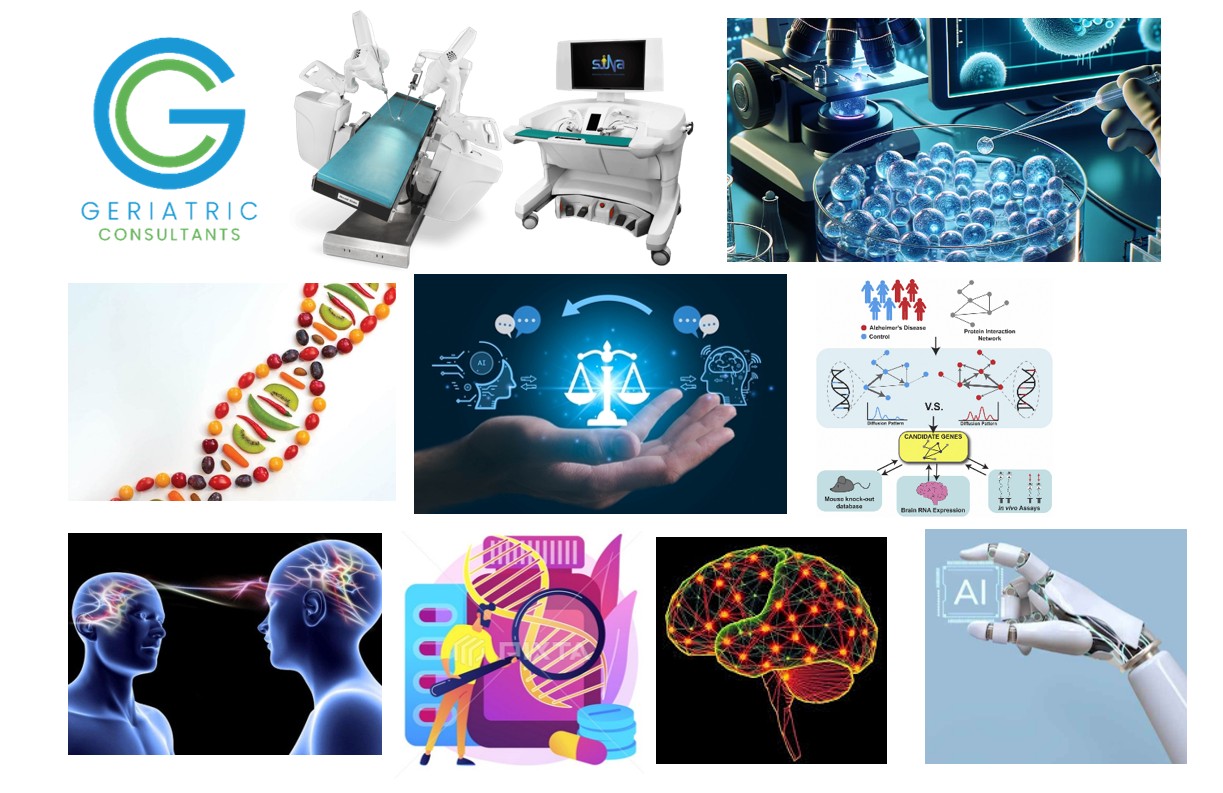
Gerontological consultant
One of the most popular professions in medicine in the future is a consultant on healthy aging, or gerontological consultant. After all, people in developed countries live much longer than before, and want to maintain a high quality of life.
The responsibilities of this specialist include several important areas:
- diagnostics of general health;
- development of an individual treatment plan;
- consultations on personal hygiene;
- selection of procedures that allow you to maximize the quality of life;
- psychological support for patients to help them get used to age-related changes faster.
What additional skills are needed
- Development of systems thinking;
- psychological training;
- knowledge in the field of social work.
Telesurgeon
A telesurgeon is not a completely new medical profession, but rather a direction for professional development in surgery.
Telesurgery is a new technology that allows an experienced surgeon to perform complex operations using remote equipment. That is, on the patient’s side there are mechanical arms with a scalpel, which the doctor controls via the Internet from anywhere in the world. And on the doctor’s side there is a wide computer screen, a three-dimensional view and everything necessary to control the surgical operation.
What additional skills are needed
- Knowledge of foreign languages;
- spatial thinking;
- excellent computer and robotic skills;
- ability to make quick decisions in stressful situations
- highly skilled in surgery
Cell biologist
A promising solution to the problem of donor organs is to develop technologies for 3D modeling of human organs for their subsequent transplantation.
The main tasks of a cell biologist, or a specialist in growing artificial organs, are to create special tissue and organs that can be implanted in the body of a sick person without consequences for health.
What additional skills are needed
- Knowledge of foreign languages;
- physical and technical education;
- deep knowledge in biology, chemistry and materials science;
- skills in working with 3D modeling and bioprinters;
- understanding of tissue engineering principles.
Developer of cyber prostheses and implants
This specialist creates artificial prostheses that should not cause rejection by the body and compensate for lost functions.
What additional skills are needed
- Physical and technical education;
- knowledge of new technologies;
- psychological training;
- deep knowledge in mechanics and materials science;
- programming and electronics skills;
- understanding of neurophysiology;
- ability to work with 3D modeling and prototyping.
Consultant for the selection of genetic traits
This specialist will not only prevent the development of hereditary diseases, but also correct (improve) the human genome.
What additional skills are needed
- Knowledge of ethical standards;
- knowledge of modern biotechnology and genetics;
- ability to work with medical databases.
Bioethicist
These specialists monitor how regulatory and legal requirements are met in the activities of medical institutions and individual specialists. The areas of interest to them are usually genetics, transplantology and cloning. In the future, no operation of this kind will be possible without mandatory consultation with a bioethicist.
What additional skills are needed
- Systemic thinking;
- customer focus;
- stress resistance, meditation and conflict resolution skills.
- psychological preparation;
- deep knowledge of philosophy, ethics and biomedical sciences;
- ability to clearly communicate complex ethical concepts.
Molecular nutritionist
Such a specialist develops an individual nutrition plan based on the unique characteristics of a person and his reactions to a particular food. To do this, the nutritionist uses data from standard tests, a genetic passport and the molecular composition of each product.
What additional skills are needed
- Systemic thinking;
- ecological thinking;
- customer focus;
- understanding of the basics of genetics and molecular biology;
- ability to interpret the results of genetic and biochemical tests.
Biopharmacologist
This is a specialist who does more than just create effective drugs. He uses biological ingredients and produces drugs with strictly specified characteristics. A biopharmacologist can, in fact, develop individual drugs.
What additional skills are needed
- Customer focus;
- knowledge of ethical standards;
- ecological thinking.
Connectome architect
A connectome is a complete diagram describing all the neural connections of the human brain. Creating such a model is one of the most difficult tasks of modern science, which is solved by connectome architects. If we manage to understand how neural connections in the human brain are arranged, we will be able to find out how psychological diseases develop and how to prevent them.
What additional skills are needed
- Spatial thinking;
- technical education;
- work with graphic programs;
- knowledge of neuroscience.
Reintegration specialist for mind unloading
The main tasks of the specialist are to prepare, preserve and transfer the human mind to a new body.
What additional skills are needed
- Perfect knowledge of technologies;
- psychological preparation to cope with uncertainty and help patients quickly adapt to new living conditions.
To the listed professions, we can add an IT geneticist, a developer of medical robots, a developer of medical gadgets, a drug designer, a medical marketer, a cyberneticist, a telemedicine specialist (network doctor), a clinical bioinformatician, an expert in personalized medicine, etc.
So, if you are planning to study to become a doctor, you have every chance to become a pioneer and build a successful career in emerging areas.