From Curiosity to Creation: Building Our Own Pyramid!!!
Sometimes, the best learning moments happen when we follow the children’s curiosity.
During our inquiry into Who Were the Greatest Builders?, the Year 3- A students became fascinated by pyramids. Their curiosity soon turned into an exciting idea: “Can we build our own pyramid?”
And so, our classroom became a little construction site!
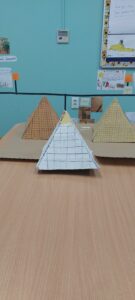
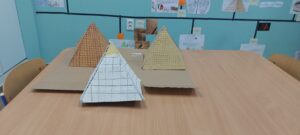
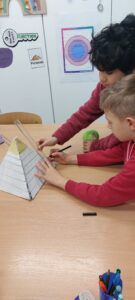
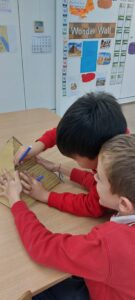
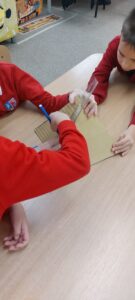
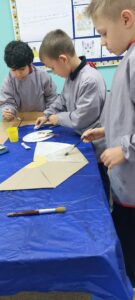
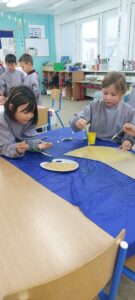
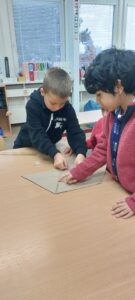
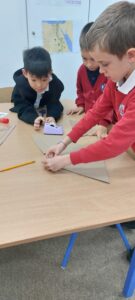
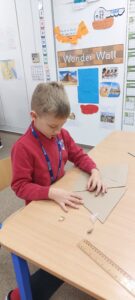
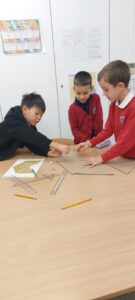
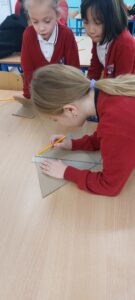
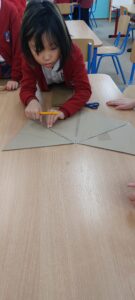
The children decided to use cardboard to create a pyramid. As they began planning, they quickly discovered that building a pyramid involved much more than simply putting pieces of cardboard together. They needed triangles, and they realised that all the triangles had to be equal in size to make their structure work.
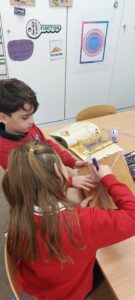
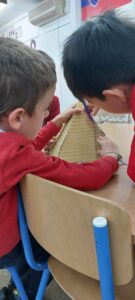
This led to some wonderful mathematical thinking. The students explored measurement, compared lengths and worked out how to create equal triangles. They also faced a real engineering challenge: how could they make the base and sides strong enough to help the pyramid stand? They experimented with the arrangement and number of blocks needed to support the structure.
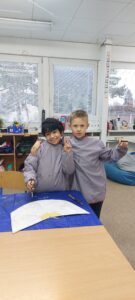
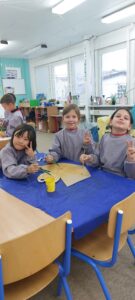
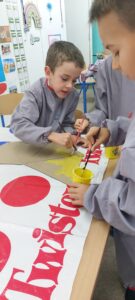
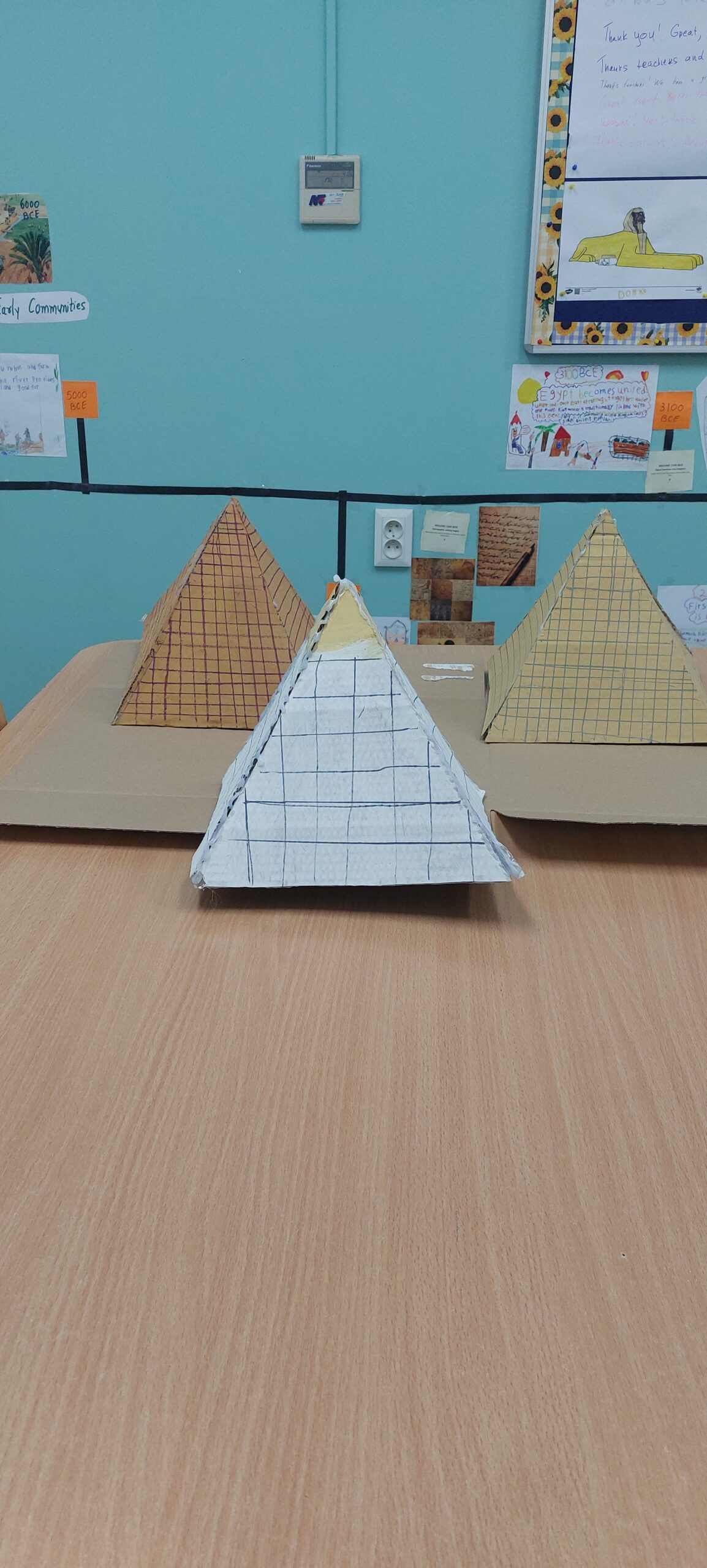
Our inquiry even continued into Art, where the children coloured and decorated the different pieces of their pyramid.
Now, after planning, measuring, creating, experimenting and working together, our pyramid is finally ready!
But the inquiry doesn’t stop here. Looking at their finished creation, the children have begun asking another important question:
“Why did people build pyramids in Ancient Egypt?”
This question opens the door to our next stage of learning, as we explore the purpose of pyramids, their connection to ancient Egyptian beliefs, and the people who designed and built these incredible structures.
Throughout this experience, the children put two important EISB skills into action: Learning How to Think, as they explored shapes, experimented with different ideas and solved construction challenges; and Learning How to Reason, as they used measurement, compared lengths and worked out how to make their pyramid stable.
What began as a simple idea has become a meaningful learning experience connecting Mathematics, Art, History, problem-solving and collaboration.
This is what inquiry-based learning looks like: children asking questions, sharing ideas, making discoveries, facing challenges and building new understanding together.
We didn’t just build a pyramid; we built our learning along the way!!