From ideas to revolution
A few weeks ago, Design teacher Ms. Merna offered me the opportunity to create an interdisciplinary unit with Year 10. Who would have guessed that Design and Individuals & Societies classes could be so much more fun and productive when taught together?
Turning points in history! That was the topic we decided to cover, with the end goal of having students build dioramas. The French Revolution. The American Revolution. The Russian Revolution. The Haitian Revolution. Those are the turning points in history that we have all studied at school as part of the history curriculum. Yet there is always one question we miss asking ourselves.
How? What inspired people?
To answer these questions, we took the French Revolution as an example and started exploring the political, economic, and social life of pre-Revolutionary France. We read and analyzed the Declaration of the Rights of Man and of the Citizen. But how were people who had blindly followed the absolute will of a monarch suddenly capable of writing the 17 articles of the Declaration?
To answer that, we delved deeper into the Enlightenment period and the people behind its ideas: philosophers whose thinking inspired people to challenge absolute monarchy, question authority, and fight for their inalienable rights.
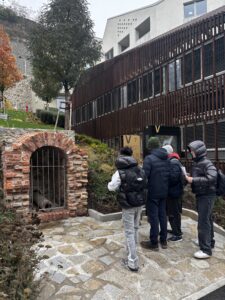
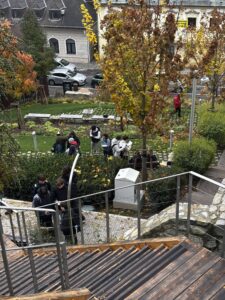
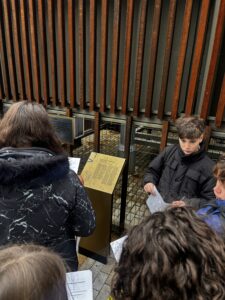
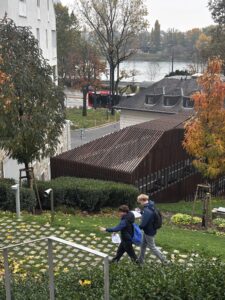
As we studied further, we decided to visit the recreation zone in Vydrica, which features trails dedicated to Wolfgang von Kempelen, a representative of the Enlightenment who resided, invented, and created in Bratislava.
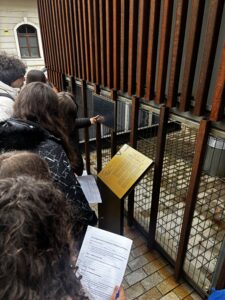
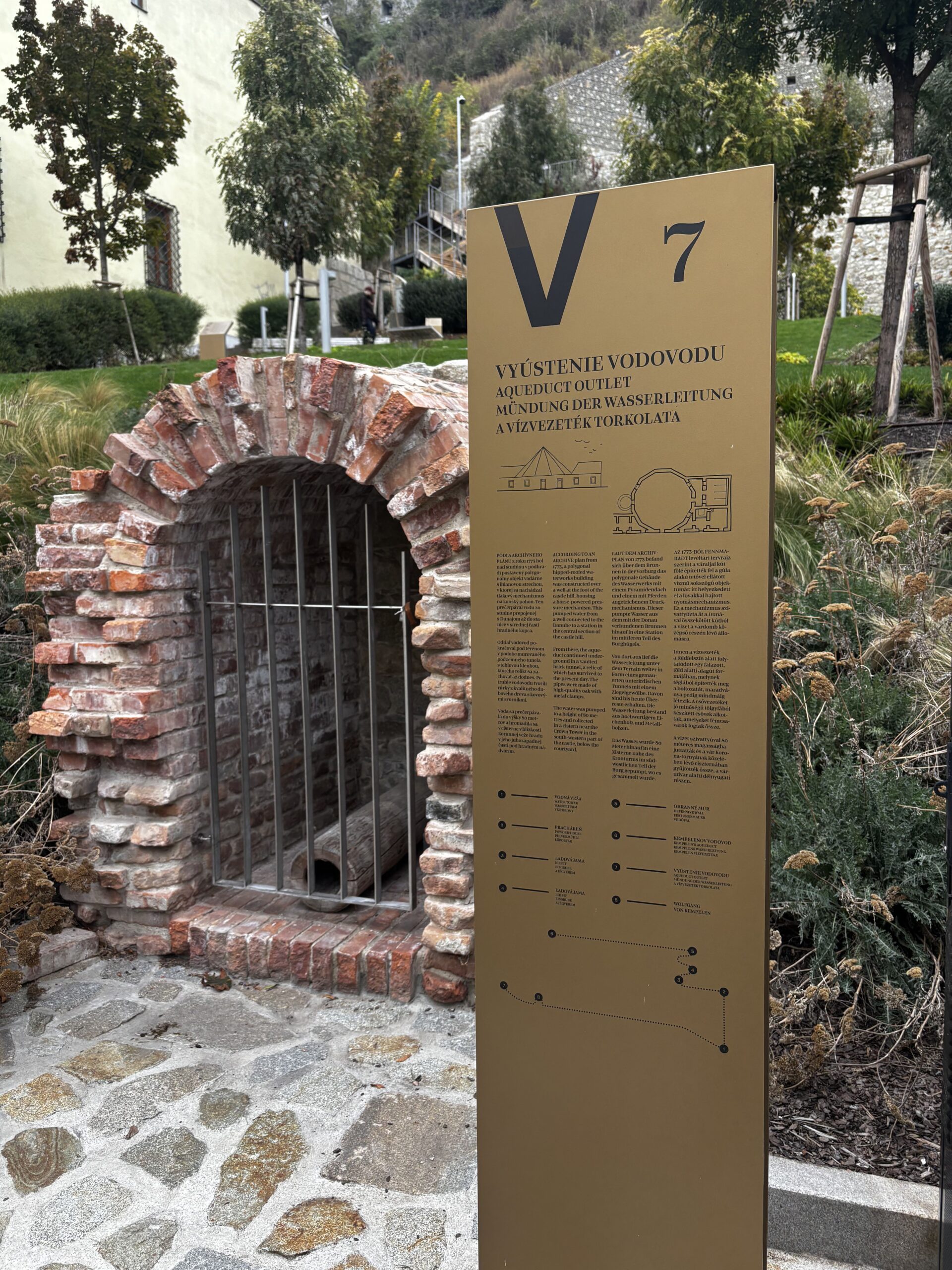
Aqueduct – built around 1773 during castle renovations to solve a chronic water-supply problem. A horse-powered engine pumped water from a well near the Danube through a wooden pipeline up roughly 80 meters high into the castle courtyard, passing through a tunnel carved into the castle hill.
The Turk – a life-sized wooden figure dressed in Ottoman robes seated behind a large cabinet with a chessboard on top. Built to impress Empress Maria Theresa in Vienna, it appeared to be an autonomous chess-playing machine. While Kempelen opened the cabinet doors to show intricate clockwork gears, a sliding false floor concealed a real, human chess master inside. The hidden player tracked the game using magnets under the board and controlled the Turk’s arm with a pantograph lever system.
And these are a few of the inventions of the polymath Kempelen.
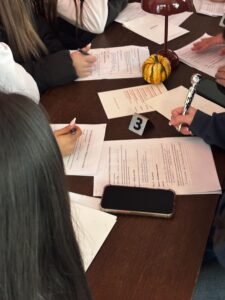
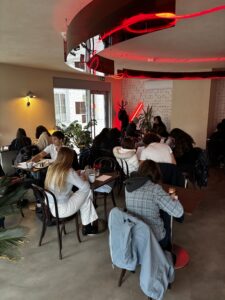
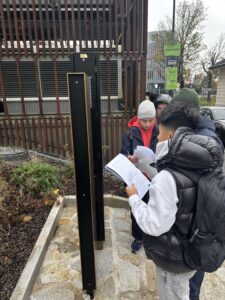
Students walked around the park, reading the information from panels, witnessing some of the inventions firsthand, filling out their worksheets. Despite the weather not being very-outdoor-trip-friendly, Year 10 students did not lose their spirit and we ended up in a cozy cafe just nearby, sipping on our gingerbread latte, enjoying the last days of fall and finishing up our reflections.