The Lesson Wasn’t About Ancient Rome
But the interesting part of this lesson was not what the students learned about Ancient Rome. It was what they were practising along the way. And perhaps more importantly, what they were not expected to get right.
In Year 4, there are regular opportunities for students to practise skills without the pressure of being assessed. In fact, during some of these practice sessions, very few expectations are given. Students are simply asked to have a go, without being told exactly how everything should be done.
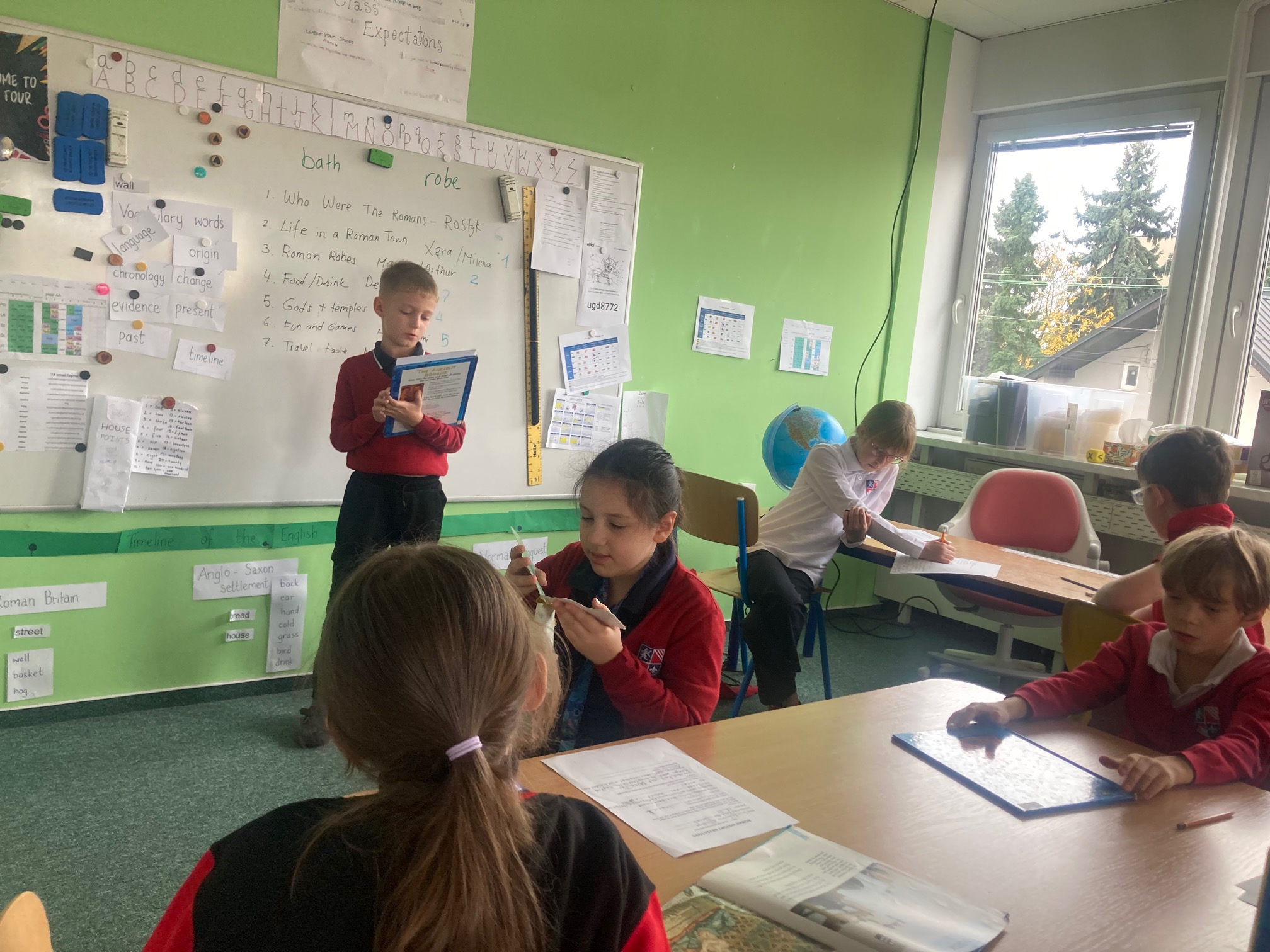
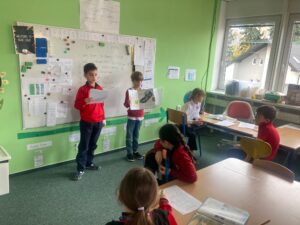
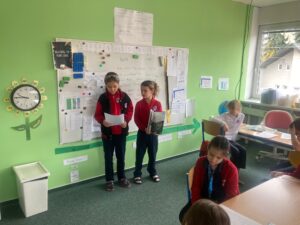
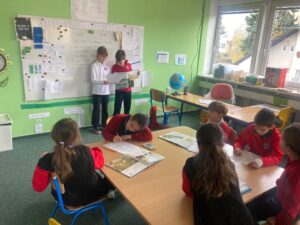
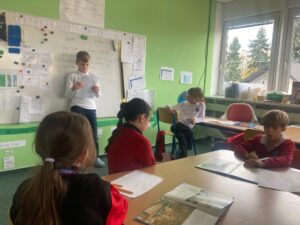
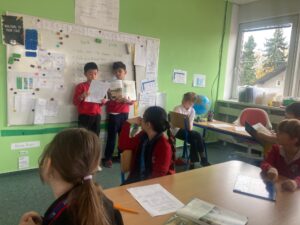
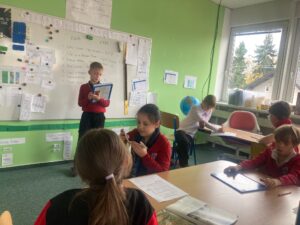
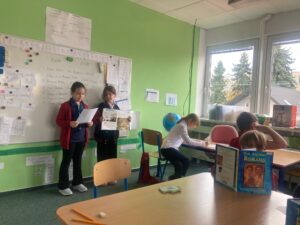
In this particular lesson, students were asked to find information they considered interesting and share it with their classmates. There was no presentation rubric, no checklist of research requirements, no grade and very little immediate feedback.

Some students confidently stood in front of the class and explained their findings. Others read directly from their notes. Some selected interesting facts, while others struggled to decide what information was worth sharing. And that was fine. That was exactly the point of the lesson.
Perhaps the question here is whether students actually knew if they were doing something right or wrong. And the answer is, not necessarily. At least not yet. During these practice sessions, getting something right is not always the priority. Having the confidence to try is.
So what was the teacher doing during all of this?
Observing, mostly. Noting down common mistakes, identifying individual challenges and looking for patterns. Which students could independently identify interesting information in a text? Which students needed guidance? Who could organise their thoughts? Who felt comfortable speaking in front of others? Who struggled to explain something they had just read?
The common challenges become the focus of future lessons. If several students are reading directly from their books rather than explaining ideas in their own words, then perhaps a lesson specifically on presentation skills is needed. If students struggle to select useful information from a text, then a lesson on how to research and identify important information would be appropriate.
But then there are the more individual challenges, and these are perhaps even more interesting.
For example, a student who struggles to identify “something interesting” from a reading passage may not necessarily have difficulty understanding the subject matter. The student might simply not know how to approach learning independently. Given clear instructions and guidance, that same student may be perfectly capable of understanding and remembering the information. The difficulty is not necessarily with the content, but with knowing how to learn it.
This is something that will likely affect the student in other subjects too. And rather than simply helping that student complete one particular research task, the focus should be on developing the underlying skill.
At EISB, four essential learning outcomes have been identified as part of the school’s Teaching Towards Tomorrow approach: Learning How to Learn, Learning How to Think, Learning How to Reason and Learning How to Communicate. These are considered skills that students need to develop throughout their education, regardless of the subject being taught.
To support this, EISB has developed an application that allows teachers to record observations about individual students and their development in these four areas. The information is shared across classes, meaning that teachers can see whether a particular skill is proving difficult for a student in just one subject or whether the same challenge appears across several learning environments.
This is particularly useful because it allows teachers to look beyond individual assignments and subject knowledge. A student may perform well in a Science test but still struggle to ask questions or make connections independently. Another student may not remember all the facts from a History lesson but may demonstrate excellent reasoning skills when discussing what happened and why.
Both observations are valuable, and both help identify what that student needs next.
But what about feedback? Surely students need to know what they are doing well and what they need to improve?
Of course they do. However, I believe that learning how to receive feedback is a skill in itself, and one that needs to be developed gradually.
Imagine being eight or nine years old and standing in front of your classmates to present something you have researched. For some children, that alone is a big achievement. Now imagine that immediately afterwards, several classmates begin pointing out what could have been done better. Even if the comments are perfectly reasonable, would that student be as willing to volunteer next time?
In Year 4, feedback is introduced little by little. Initially, the focus is simply on giving students the confidence to try something in front of their peers, at whatever level they are comfortable with. Students also need to feel comfortable with their teacher and understand that making mistakes is not something to be afraid of.
Sometimes there is no feedback at all. Then small amounts of positive feedback are introduced. Students are taught how to recognise something positive in another student’s work and how to communicate that appropriately.
Later comes the introduction of constructive criticism. But before students are expected to receive it, there needs to be time spent discussing what criticism actually is and how to deal with it. How does it feel when someone suggests doing something differently? Does that mean the original attempt was wrong? How can a suggestion be used to improve?
At the same time, students need to learn how to give criticism. There is quite a difference between telling someone that their presentation was boring and suggesting that looking up from their notes might make the presentation more interesting.
Eventually, more difficult feedback can be introduced, including how to deal with negative criticism, how to recognise whether criticism is useful and how to respond to it. All of this takes time and happens alongside the regular learning taking place in the classroom. It is not a separate unit or a one-off lesson on giving feedback. It is something that needs to be practised over and over again.
And of course, not every student will be at the same stage. Some students are confident speaking in front of others but find it difficult to accept criticism. Others may be excellent at identifying areas for improvement but are reluctant to share their own ideas. Each student has different strengths and different skills that need developing.
The ultimate goal is to develop students who are not afraid to use these skills. Students who are not afraid to think differently from others, to reason in a way that goes against the crowd, to communicate in front of people they do not know, or to explore something simply because they are interested in learning about it.
Students who understand that getting something wrong is not necessarily a bad thing, and that being corrected does not mean they have failed.
None of this happens overnight. It takes practice, observation, patience and opportunities to try things without the constant pressure of having to get them right.
So yes, last week Year 4 students researched Ancient Rome and gave presentations to their classmates. Some presentations were better than others. Some research was more detailed. Some students needed more help than others.
But nobody was graded, and nobody was expected to be perfect.
As their teacher, however, I came away with a much clearer picture of what individual students need to work on, which skills require more attention across the class and what the next steps should be.
And that was the real purpose of the lesson.
Because sometimes the most valuable thing to come out of a lesson is not what students have learned about the topic, but what the teacher has learned about the students.
And that, I think, is worth writing a blog about.