
From Amino Acids to Real-Life Functions
Year 10–11 Biology students spent three lessons exploring proteins through six learning stations. Instead of listening to a long lecture, the students worked in small groups and completed different practical and thinking tasks. Each student used a “Protein Passport” to record drawings, answers, evidence and conclusions.
At the first station, students used molecular model kits to build amino acids. They identified the amino group, carboxyl group and variable R group. They then joined amino acids together and explored how a peptide bond is formed. This helped them see that proteins are built from smaller units.
Another station focused on the four levels of protein structure: primary, secondary, tertiary and quaternary structure. Students studied what happens when a protein is heated or when its different chains separate. They learned that even a small change in structure can change the function of a protein.
Students also investigated the jobs of different proteins. They matched haemoglobin, collagen, insulin, antibodies, amylase and aquaporins with their functions and locations in the body. They then created short “employment cards” for the proteins and explained why each protein is suitable for its job.
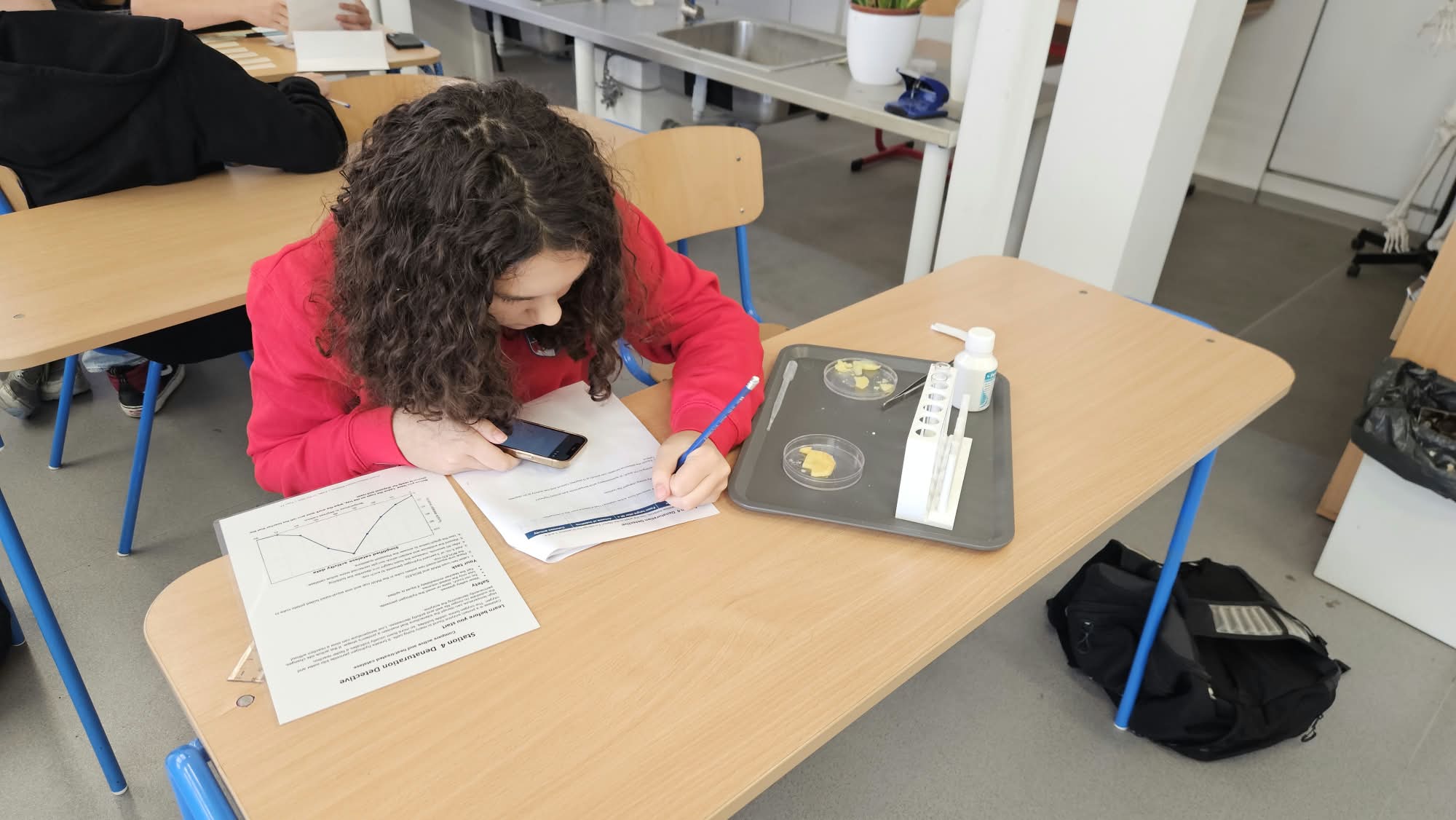
At the denaturation station, students analysed results from a catalase investigation. They compared the activity of the enzyme at different temperatures and in raw and boiled potato. They had to separate observations from explanations and use the evidence to make a conclusion.
The nutrition station asked students to evaluate common statements about protein. They discussed plant proteins, essential amino acids, protein supplements and muscle growth. They also designed balanced meals for an athlete. The aim was not only to remember facts, but also to recognise claims that sound scientific but are not fully correct.
At the final station, students studied sickle-cell disease, lactose intolerance and cystic fibrosis. They followed the chain from a change in a protein to changes in cells, tissues, organs and the whole body.
Different students showed particular strengths during the work. Ivan and Max produced very strong work on amino acids and protein structure. Tadeas and Richard showed excellent understanding of protein functions. Timo and Defne were especially successful when analysing the denaturation evidence. Igor, Norbert, Aleena and Richard gave strong answers when evaluating the nutrition claims. Igor, Norbert and Lev explained the medical examples particularly well.
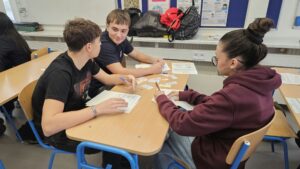
Aleena completed the strongest and most complete Protein Passport. Ivan, Max, Tadejas and Richard also worked at a consistently high level across the different stations.
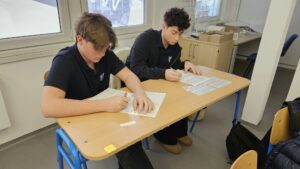
The class was most successful in understanding protein structure and denaturation. Forming peptide bonds and explaining condensation reactions were more difficult, so these ideas will be reviewed again. Overall, the three lessons helped students connect molecular structures with food, health, disease and the everyday work of the human body.